This page may contain affiliate links. If you buy through them, we may earn a commission at no extra cost to you. This helps support our research and testing. Learn more.
Compare anti-snoring mouthpieces for comfort, teeth grinding, sleep apnea, fit, and price — plus a buyer’s guide to picking the right type for your specific problem.
The best mouth guard for snoring is usually an oral appliance that repositions your jaw or tongue — not a standard sports mouthguard. Most of the products in this category are mandibular advancement devices, or MADs, which gently move your lower jaw forward to open up space in your airway.
Some mouth guards are built specifically for snoring. Others double as a night guard for people who also grind their teeth. A smaller group is designed to work alongside a sleep apnea diagnosis, and those need a different level of care in how you choose and fit them.
Below, we break down seven of the top anti-snoring mouth guards for 2026, organized by who each one fits best, followed by a full buyer’s guide so you can match a device to your specific situation.
Quick Verdict
For most people with ordinary jaw-related snoring, VitalSleep is the best overall choice thanks to its two sizes and precise 1mm adjustability. If you also grind your teeth, SnoreRx Plus is the clear winner because it allows lateral jaw movement. For suspected sleep apnea or jaw pain, Good Morning Snore Solution offers a gentler tongue-retaining approach.
Quick Picks: Best Mouth Guards for Snoring
This table gives you a fast overview before we go through each pick in detail. Prices are not shown because they vary by retailer; use the CTA buttons to check current pricing.
| Product | Best For | Type | Adjustable? | Grinding? | Sleep Apnea? | Rating | CTA |
|---|---|---|---|---|---|---|---|
| VitalSleep | Best Overall | MAD | Yes, 1mm increments | Not primary use | Discuss with doctor first | Check Price | |
| SnoreRx Plus | Snoring + Grinding | MAD | Yes, micro-adjustable | Yes, allows lateral movement | No | Check Price | |
| Good Morning Snore Solution | Snoring + Suspected Apnea (OTC) | TRD | No | Not designed for grinding | Discuss with doctor first | Check Price | |
| SnoreRx | Most Adjustable | MAD | Yes, calibrated scale | Not primary use | No | Check Price | |
| Zyppah | Most Comfortable | Hybrid MAD + tongue strap | Limited | Not primary use | No | Check Price | |
| ZQuiet | Best Budget | MAD | Minimal | Not designed for grinding | No | Check Price | |
| Remi | Best Custom-Fit (DTC lab) | Custom MAD | Semi-custom fit | Some models | Discuss with a dentist | Check Price |
Prices vary by retailer and by whether you buy directly from the manufacturer. It’s worth checking the current price before deciding, since many of these brands run seasonal promotions.
Best Mouth Guards for Snoring
Each review below follows the same format: why we picked it, who it’s best for, what makes it different, its strengths and limitations, and whether it’s worth the price.
1. VitalSleep
VitalSleep solves a common problem: most boil-and-bite MADs come in one size and don’t fit most mouths well. VitalSleep ships in two sizes and includes an adjustment tool that moves the jaw forward in small, 1-millimeter increments.
It’s best for people who want one dependable device without visiting a dentist. The micro-adjustability means you can dial in just enough advancement to open your airway without pushing your jaw further than it needs to go, which is one reason it tends to cause less soreness than fixed-position devices.
What makes it different: the accessory kit includes a travel case, cleaning brush, and a fitting tool most competitors don’t include, and the company offers a 30-night trial period.
What We Like
- Two sizes for a closer initial fit, precise adjustability, long trial period
- FDA-registered as a Class II medical device
What to Consider
- The boil-and-bite process takes a few attempts to get right
- Not intended to treat diagnosed sleep apnea
Is it worth the price? For most sleepers dealing with ordinary snoring, yes. It sits in the middle of the price range and the adjustability helps you avoid buying a second device if the first fit is too aggressive.
Who should skip it: people who already know they grind their teeth heavily, since a device built for lateral jaw movement is a better match.
2. SnoreRx Plus
A lot of people search for a mouth guard for snoring and teeth grinding as if it’s one product category, but it isn’t automatically the same thing. A standard MAD locks your jaw in a forward position, which can be uncomfortable or even risky if you clench or grind, since it limits the side-to-side motion your jaw needs.
SnoreRx Plus addresses this by allowing lateral jaw movement while still holding your jaw forward. That combination is what makes it a genuine dual-purpose option rather than a snoring device that happens to also be marketed for grinding.
This section matters because readers with both problems are often shopping for one product to solve them, and not every anti-snoring MAD on the market is built to do that safely.
What We Like
- Allows lateral movement, reducing strain on the jaw joint during grinding
- Calibrated advancement scale for tracking adjustments
What to Consider
- Bulkier than some single-purpose MADs
- Costs more than a basic snoring-only mouthpiece
Worth the price for most people managing both issues, since buying two separate devices would likely cost more and be less comfortable than one that’s designed to do both.
3. Good Morning Snore Solution
This category needs careful wording. Snoring alone doesn’t mean someone has sleep apnea, and an over-the-counter mouth guard is not a treatment for diagnosed obstructive sleep apnea. For adults with confirmed OSA, professional guidelines call for a custom, dentist-fitted, titratable oral appliance, or CPAP, rather than a generic device bought online.
With that said, Good Morning Snore Solution is a tongue-retaining device, or TRD, that some people use as a gentler alternative to jaw-advancement MADs. Instead of moving your jaw, it holds your tongue forward using gentle suction, which keeps the airway clearer without putting pressure on your teeth or jaw joint.
Who it’s best for: people who’ve been told their snoring is mild and jaw-related, or who can’t tolerate a MAD because of jaw pain, TMJ issues, or dental work that makes a jaw-advancement device impractical.
What We Like
- No impact on teeth or jaw position, since it doesn’t attach to your teeth
- One universal size, so there’s no boil-and-bite fitting step
What to Consider
- The suction sensation feels unusual to many first-time users
- Not appropriate as a substitute for a diagnosed OSA treatment plan
If you have loud snoring plus gasping, choking, witnessed breathing pauses, or daytime sleepiness, a sleep study and a conversation with a doctor should come before any OTC purchase. See our guide to sleep apnea diagnosis and treatment.
4. SnoreRx
Adjustability matters because the right amount of jaw advancement is different for everyone. Too little, and the device won’t do much. Too much, and you’ll wake up with a sore jaw.
SnoreRx uses a calibrated scale built into the side of the device, so you can see exactly how far your jaw is advanced and move it in small steps until you find a comfortable setting that also reduces snoring.
What We Like
- Visible calibration makes fine-tuning straightforward
- One-piece design is easier to clean than devices with detachable parts
What to Consider
- The boil-and-bite fit takes practice to get precise
- Some side sleepers find the size noticeable at first
Worth considering if you’ve tried a fixed-position mouth guard before and found it either too weak or too aggressive.
5. Zyppah
Zyppah pairs a mild jaw-advancement design with a soft elastic strap that holds the tongue forward, so it doesn’t need to push the jaw as far as a jaw-only MAD to get a similar airway benefit.
In practice, that hybrid approach tends to feel less intense during the first few nights, which is one reason it’s a common recommendation for people who gave up on a bulkier device.
What We Like
- Softer initial adjustment period compared with jaw-only MADs
- Single boil-and-bite fitting, no separate tool needed
What to Consider
- The tongue strap takes some getting used to for mouth breathers
- Limited advancement range compared with fully adjustable MADs
A good option if comfort has been the reason previous devices didn’t stick, though it may offer less airway support for more severe snoring than a fully adjustable MAD.
6. ZQuiet
ZQuiet skips the boil-and-bite step entirely. It’s ready to wear out of the box, using a flexible hinge that lets your jaw move slightly while still holding a snoring-reducing position.
That convenience comes with a trade-off: less precision than a fully adjustable device, and less protection against grinding, since it’s built for snoring first.
What We Like
- No fitting process, low upfront cost
- Comes in two sizes with a living-hinge design that allows natural jaw movement
What to Consider
- Less fine-tuning than adjustable competitors
- Shorter expected lifespan than premium options
One drawback of going with the cheapest option is that you may need to replace it sooner, which can close the price gap with a mid-range device over a year of use. Still, it’s a reasonable starting point if you’re not sure a mouth guard will work for you yet.
7. Remi
There’s a real middle ground between a $20 boil-and-bite guard and a $500-plus in-office dental appliance, and that’s where direct-to-consumer, or DTC, custom lab devices like Remi fit in.
With this type of product, the company mails you a putty impression kit, you take an impression of your bite at home, and a dental lab molds a custom device from the results. It’s a step up in fit and durability from OTC devices, without the cost of dentist visits, though it’s still not the same as an in-office, titratable appliance prescribed for diagnosed sleep apnea.
What We Like
- Custom mold typically fits and feels closer to a dentist-made appliance
- Made from medical-grade materials designed for long-term wear
What to Consider
- Highest price point among OTC-style options
- Turnaround time for the lab-molded device is longer than an off-the-shelf purchase
This is a strong pick if you’ve already tried a boil-and-bite device and know a MAD works for you, but want a better long-term fit.
What Is a Mouth Guard for Snoring?
“Mouth guard” is a broad consumer term that covers several different products, and they aren’t interchangeable. Knowing the difference helps you pick the right one instead of guessing.
Mandibular Advancement Devices
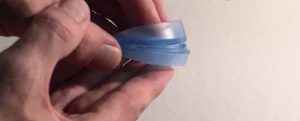
A mandibular advancement device, or MAD, fits over your upper and lower teeth and holds your lower jaw slightly forward. Moving the jaw forward pulls the base of the tongue and surrounding tissue away from the back of the throat, which can leave more room for air to pass through.
Tongue-Retaining Devices
A tongue-retaining device, or TRD, works differently. Instead of moving your jaw, it holds the tip of your tongue forward using gentle suction. This can be a good option for people whose jaw joint can’t tolerate a MAD.
Traditional Night Guards
A traditional night guard is designed to protect your teeth from the wear caused by grinding or clenching, known as bruxism. Most standard night guards don’t reposition the jaw or tongue at all, so they aren’t built to treat snoring, even though people sometimes shop for them expecting a dual benefit.
How Do Mouth Guards for Snoring Work?
The basic mechanism behind most anti-snoring mouth guards follows a simple chain: moving the lower jaw forward pulls the tongue forward with it, which creates more room in the airway, which reduces the tissue vibration that causes the snoring sound.
The FDA classifies these as intraoral devices intended to help with snoring and, in some cases, obstructive sleep apnea, and reviews them under specific special-controls guidance for that device category. That’s part of why checking a product’s regulatory status is a useful step before buying one.
Best Mouth Guard for Snoring and Teeth Grinding
Can One Mouth Guard Stop Snoring and Teeth Grinding?
Sometimes, but not automatically. A device has to be designed for both problems at once. A standard MAD that locks your jaw rigidly forward can make grinding-related jaw pain worse, while a standard grinding guard usually isn’t built to advance the jaw enough to reduce snoring.
MAD vs. Traditional Night Guard for Grinding
| Feature | Anti-Snoring MAD | Traditional Night Guard |
|---|---|---|
| Reduces snoring | Yes, when appropriate | Not its primary purpose |
| Protects teeth | Depends on design | Yes |
| Moves lower jaw | Yes | Usually no |
| Designed for bruxism | Some models | Yes |
| Sleep apnea use | Certain devices | No |
Ordinary store-bought grinding guards aren’t automatically appropriate for snoring or sleep apnea, and the reverse is true as well. If you deal with both grinding and snoring, look specifically for a MAD that allows lateral jaw movement, like SnoreRx Plus above, rather than assuming any night guard will do double duty. For more options, see our guide to the best mouth guard for snoring.
Best Mouth Guard for Snoring and Sleep Apnea
Snoring alone isn’t enough to diagnose sleep apnea. Obstructive sleep apnea, or OSA, happens when the airway repeatedly narrows or closes during sleep, which can briefly stop breathing dozens of times a night. It’s typically diagnosed with a sleep study, not by how loud someone snores.
Oral appliance therapy can be an appropriate option for certain adults with OSA, particularly those with mild to moderate cases or those who can’t tolerate CPAP. Clinical guidelines from sleep medicine groups generally call for a qualified dentist to fit a custom, titratable appliance for diagnosed OSA, rather than a one-size or boil-and-bite consumer device.
If your situation fits any of the following, it’s worth bringing up with a doctor before relying on an OTC mouth guard:
- Loud, frequent snoring combined with gasping or choking sounds during sleep
- Witnessed pauses in breathing
- Significant daytime sleepiness despite a full night in bed
- Morning headaches or a dry mouth most days
Mouth Guard vs. Other Anti-Snoring Devices
A mouth guard is one option among several, and it isn’t the right fit for every type of snoring. Here’s how it compares with other common approaches.
| Solution | Best For | Main Advantage | Main Drawback |
|---|---|---|---|
| Mouth guard / MAD | Jaw-related snoring | No electricity, portable | Takes an adjustment period |
| Tongue-retaining device | Tongue-related snoring | Doesn’t move the jaw | Can feel unusual at first |
| Nasal strips | Nasal congestion | Simple to use | Limited effect for some snorers |
| Anti-snoring spray | Dryness or mild throat issues | Easy, no fitting needed | Results vary widely |
| CPAP | Diagnosed sleep apnea | Highly effective when used correctly | More equipment, adjustment period |
| Positional therapy | Back-sleeping snorers | Simple, low-cost | Requires consistent use |
How to Choose the Best Mouth Guard for Snoring
Are you a mouth snorer or a nasal snorer? It’s worth answering this before you buy anything. Mouth guards address jaw- and tongue-related snoring. If your snoring is driven mainly by nasal congestion or a narrow nasal passage, a MAD or TRD may not help much on its own, and pairing it with a nasal strip or dilator is often more effective. A simple way to check: try breathing through your nose only for a minute while awake. If that feels difficult or you frequently wake up with a dry mouth, nasal resistance may be part of what’s going on. See our guide to nasal strips for snoring.
1. Choose the Right Type
Start with MAD vs. TRD vs. traditional night guard, based on what you learned above. A MAD is the most common starting point for jaw-related snoring, a TRD works well for people who can’t tolerate jaw movement, and a traditional night guard is for grinding, not snoring, unless it’s specifically built to do both.
2. Look for Adjustability
An adjustable device lets you find the smallest amount of jaw advancement that still reduces snoring, which usually means less soreness. Fixed-position devices can work, but there’s less room to fine-tune if the first setting isn’t comfortable.
3. Consider Fit and Customization
Fit options generally fall into four tiers, from least to most involved:
- Boil-and-bite: You shape the device at home in hot water. Affordable and widely available.
- Semi-custom: Comes in multiple sizes for a closer starting fit.
- DTC lab custom: You mail in a home impression kit, and a lab molds a custom device, at a mid-range price.
- Dentist-fitted: A dental professional takes impressions in-office and creates a fully custom, often titratable, appliance. This is the standard route for diagnosed OSA.
4. Check Whether You Grind Your Teeth
If you already know you grind or clench, or a dentist has pointed out worn enamel, look specifically for a device built to allow lateral jaw movement rather than a rigid, fixed-position MAD. See our guide to the best mouth guard for teeth grinding.
5. Consider Your Sleep Apnea Status
If sleep apnea is suspected or diagnosed, an OTC product shouldn’t be treated as a substitute for a sleep study or a dentist-fitted appliance. It can still be worth discussing oral appliance therapy as an alternative to CPAP with your provider. See our guide to alternatives to CPAP therapy.
6. Look at Trial and Return Policies
Oral appliances often take a week or two to feel normal. A longer trial period, generally 30 nights or more, gives you a fair chance to adjust before deciding whether a device is right for you.
7. Consider Cleaning and Durability
Most devices need a daily rinse and a weekly deeper clean with a denture-cleaning tablet or mild solution, and manufacturers typically recommend replacing boil-and-bite devices every six months to a year as the material wears down.
8. Check Materials and Regulatory Status
Look for materials described as BPA-free and latex-free, since these are common sensitivities for something worn against your teeth and gums for hours at a time. It’s also worth checking whether a product has FDA clearance or registration as a medical device, which is a signal that the manufacturer has met a baseline safety and labeling standard rather than marketing an unregulated novelty item. See our guide to FDA-approved snoring devices.
Are Mouth Guards for Snoring Safe?
For most healthy adults, anti-snoring mouth guards are considered low-risk, but they aren’t free of side effects. Based on FDA guidance for this device category, common issues include:
- Jaw soreness, especially in the first week or two
- Tooth or gum discomfort
- Excess saliva or, in some cases, dry mouth
- Temporary bite changes after removing the device in the morning
- TMJ symptoms, such as jaw clicking or tenderness
- Tooth movement with long-term use, in rare cases
Most of these fade as you get used to the device. If jaw pain is sharp, persistent, or getting worse rather than better, that’s a sign to stop using the device and check in with a dentist.
Who Should Avoid or Discuss a Snoring Mouth Guard With a Dentist?
A quick conversation with a dentist is a good idea if you have significant TMJ problems, loose teeth, advanced gum disease, certain respiratory conditions, or suspected, untreated sleep apnea. For most other healthy adults, an OTC device is reasonable to try. See our guide to TMJ causes, symptoms, and treatment.
How to Fit a Mouth Guard for Snoring
- Read the manufacturer’s instructions fully before starting.
- Prepare the device, which usually means heating water to the specified temperature.
- Perform the boil-and-bite fitting if your device requires it, following the timing in the instructions closely.
- Position your jaw correctly, generally in a slightly forward bite, while the material is still moldable.
- Hold the position and allow the appliance to set and cool.
- Test comfort while awake, checking for any sharp pressure points.
- Start with shorter periods of wear if the manufacturer recommends it.
- Gradually transition to full overnight use over several nights.
How to Get Used to Sleeping With a Snoring Mouth Guard
“It feels bulky.”
This is common in the first few nights. In most cases, the sensation fades within a week as your mouth adjusts.
“My jaw hurts.”
Mild soreness is common at first. If you’re using an adjustable device, try backing off the advancement slightly and increasing it gradually.
“I have too much saliva.”
Excess saliva is a frequent early side effect and usually settles down within the first couple of weeks.
“I can’t keep my mouth closed.”
If your device doesn’t fit snugly, it may not stay in place well. A closer-fitting size or a custom option can help.
“I wake up with a different bite.”
A temporary bite shift after waking is common and typically resolves within a few minutes to an hour. If it lasts longer than that or seems to be getting worse, check in with a dentist.
“When should I stop using it?”
Stop and consult a dentist if you notice ongoing jaw pain, loosening teeth, or a bite that doesn’t return to normal during the day.
Do Mouth Guards Really Stop Snoring?
For the right person, yes, in most cases they meaningfully reduce snoring. But no mouth guard works for every type of snoring, and results vary depending on what’s actually causing the noise.
When They Tend to Work Best
- Snoring caused mainly by jaw position or tongue collapse
- Certain types of mild to moderate obstructive snoring
- People who can comfortably tolerate wearing an oral appliance
When They May Not Work Well
- Severe, untreated sleep apnea
- Nasal obstruction as the primary cause of snoring
- Central sleep apnea, which isn’t an airway-blockage problem
- A poor-fitting device
- Choosing the wrong device type for your specific snoring cause
Mouth Guard for Snoring Reviews: What to Look For
Rather than repeating manufacturer claims, here’s the methodology we use when evaluating anti-snoring mouth guards, so you can apply the same checklist to any product you’re considering.
- Airway design: does the mechanism (jaw advancement or tongue retention) match established approaches
- Adjustability: can the fit be fine-tuned, or is it a single fixed position
- Fit and sizing options: boil-and-bite, semi-custom, DTC lab, or dentist-fitted
- Comfort during a multi-night trial
- Materials: BPA-free and latex-free status
- Durability and expected replacement schedule
- Cleaning requirements
- Trial period and return policy
- Manufacturer transparency about limitations, including sleep apnea
- FDA clearance or registration status, where applicable
- Suitability for specific use cases, such as grinding or side-sleeping
Based on our evaluation, the products that score well across most of these categories are the ones featured in the reviews above.
Ready to Stop Snoring Tonight?
Our top pick for most people is VitalSleep. It combines two sizes, precise 1mm adjustability, and a 30-night trial, making it the most dependable starting point for ordinary snoring.
Frequently Asked Questions
What is the best mouth guard for snoring?
It depends on your specific situation, but VitalSleep is a strong all-around pick for most people dealing with ordinary jaw-related snoring, thanks to its adjustability and long trial period.
Do mouth guards actually help with snoring?
For many sleepers, yes, especially when the snoring is related to jaw position or tongue collapse. Results vary depending on the underlying cause and how well the device fits.
What is the best mouth guard for snoring and teeth grinding?
SnoreRx Plus is designed for this combination because it allows lateral jaw movement while still holding the jaw in an advanced position.
Can a mouth guard stop snoring and sleep apnea?
An OTC mouth guard isn’t a treatment for diagnosed sleep apnea. Oral appliance therapy can help certain adults with OSA, but guidelines generally call for a dentist-fitted, titratable appliance rather than a generic device.
Is a mouth guard better than CPAP for snoring?
For simple snoring without sleep apnea, a mouth guard is often a simpler, more portable option. For diagnosed OSA, CPAP is generally considered more effective, though some people use an oral appliance as an alternative when they can’t tolerate CPAP. See our guide to snoring mouthpiece vs CPAP.
What is the difference between a night guard and a snoring mouth guard?
A night guard is built to protect teeth from grinding and usually doesn’t reposition the jaw. A snoring mouth guard, or MAD, is built specifically to move the jaw forward to open the airway.
Can I use a regular mouth guard to stop snoring?
Not reliably. A standard grinding guard isn’t designed to advance the jaw enough to meaningfully reduce snoring.
Are anti-snoring mouth guards safe?
For most healthy adults, yes, when used as directed. Mild jaw soreness and excess saliva are common at first, and it’s worth discussing use with a dentist if you have TMJ issues or dental concerns.
How long does it take to get used to a snoring mouth guard?
Most people need one to two weeks to adjust. If discomfort continues past that, checking the fit or the amount of jaw advancement is a good next step.
Can a dentist make a custom mouth guard for snoring?
Yes. A dentist can create a fully custom, titratable oral appliance, which is generally the recommended route for diagnosed sleep apnea and for people who haven’t had success with OTC devices.
Final Verdict: Which Mouth Guard for Snoring Should You Buy?
Choose VitalSleep if you want a dependable, adjustable option that covers most cases of ordinary snoring.
Choose SnoreRx Plus if teeth grinding is also a concern and you need a device built for both problems at once.
Choose Good Morning Snore Solution if you’re specifically dealing with diagnosed or suspected sleep apnea and need a gentler oral-appliance option to discuss with your doctor or dentist, or Remi if you and your dentist have decided a custom-fit MAD is the right route.
Choose ZQuiet if budget is your priority and you want to try a mouth guard before committing to a pricier option.
If your biggest issue is a specific combination — snoring and grinding, or snoring alongside a sleep apnea diagnosis — start with the product built for that exact combination rather than the most popular overall pick. That’s the choice most likely to actually solve the problem you have.