Snoring isn’t one problem with one fix. It can start in your nose, your mouth, your tongue, or the way your jaw sits while you sleep. That’s why the device that quiets your partner’s snoring might do nothing for yours.
In this guide, we’ll walk through the best anti-snoring devices for 2026, organized by what’s actually causing the noise. A mouthpiece that pulls your jaw forward makes sense if your airway is collapsing at the back of your throat. A nasal dilator makes more sense if congestion is the real issue. And if you snore loudly, gasp during the night, or feel exhausted no matter how many hours you sleep, a device alone may not be the right starting point — that pattern can point to obstructive sleep apnea (OSA), which deserves a conversation with a doctor before you shop.
We’ll cover nine specific products, explain the different device categories, walk through how to match a device to your situation, and answer the questions people ask most often about snoring devices, FDA clearance, and safety. Our goal for most sleepers is to reduce snoring and improve airflow. It isn’t a substitute for a sleep apnea diagnosis if your symptoms suggest one.
Best Anti-Snoring Devices at a Glance
Here’s a quick comparison before we get into the full reviews. Use it to narrow things down, then read the section that matches your situation.
| Device | Best For | Device Type | Mouth Breathers | FDA Status |
|---|---|---|---|---|
| SnoreRx Plus | Best overall | Mandibular advancement device (MAD) | Yes, open-front design | FDA-cleared for snoring |
| VitalSleep | Best for mouth breathers | MAD | Yes, large airflow opening | FDA-cleared for snoring |
| Good Morning Snore Solution | Best tongue-retaining device | Tongue-retaining device (TRD) | Yes | FDA-cleared for snoring |
| Mute by Rhinomed | Best internal nasal dilator | Nasal device | Not applicable | FDA-cleared as a nasal dilator |
| Breathe Right Extra Strength | Best budget nasal option | Nasal device | Not applicable | FDA-cleared as a nasal strip |
| Smart Nora | Best smart anti-snoring device | Positional/vibration device | Yes | Not a medical device; no OSA claim |
| eXciteOSA | Best daytime neuromuscular therapy | Muscle-stimulation device | Yes (used while awake) | FDA-cleared, prescription-only, for snoring and mild OSA |
| ZQuiet | Best budget oral appliance | MAD (hinge design) | Yes, flexible hinge | FDA-cleared for snoring |
| SlumberBump | Best positional therapy device | Positional trainer | Yes | Not a medical device; no OSA claim |
We didn’t rank these by star rating alone. Each one earned its spot because it solves a specific version of the snoring problem — mouth breathing, a small jaw, nasal congestion, or a preference for a daytime, mask-free routine.
The 9 Best Anti-Snoring Devices of 2026
1. SnoreRx Plus — Best Overall Anti-Snoring Device
JAW-RELATED SNORING
SnoreRx Plus
A highly adjustable boil-and-bite mandibular advancement device (MAD) with micro-adjustments and lateral movement, ideal for jaw-related snoring.
Best for customizable jaw advancement without the dentist price tag.
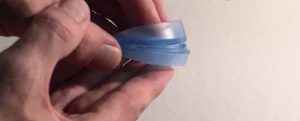
What it is: SnoreRx Plus is a boil-and-bite mandibular advancement device (MAD). It fits over your upper and lower teeth like a sports mouthguard and gently holds your lower jaw slightly forward.
How it works: Moving the jaw forward opens up space at the back of the throat, which reduces the soft-tissue vibration that causes snoring. SnoreRx Plus adjusts in 1-millimeter increments, so you can dial in the smallest advancement that stops the snoring without overextending your jaw.
Who it’s best for: People whose snoring comes from airway collapse rather than nasal congestion, and who want a customizable fit without paying for a dentist-made appliance.
What makes it different: Most boil-and-bite MADs lock you into one setting. SnoreRx Plus lets you make micro-adjustments after the initial fit, plus lateral (side-to-side) adjustment for jaw comfort — a feature most competitors skip.
What We Like
- Precise, incremental adjustment instead of a one-size-fits-all fit
- Open-front design that allows some mouth breathing
- Durable dual-layer material
What to Consider
- Bulkier than some tongue-retaining alternatives
- Requires disassembly for thorough cleaning
- Not designed for people with significant dental work, loose teeth, or dentures
Is it worth the price? For most people with straightforward, jaw-related snoring, yes. It sits in the middle of the price range for MADs and the adjustability tends to pay for itself if your first setting doesn’t fully solve the problem.
Who should skip it: Anyone with TMJ disorders, loose teeth, or extensive dental work should talk to a dentist before using any MAD, including this one. You can learn more in our full SnoreRx review.
2. VitalSleep — Best Anti-Snoring Device for Mouth Breathers
OPEN-MOUTH SNORING
VitalSleep
An FDA-cleared MAD with a large airflow opening specifically designed for mouth breathers and smaller jaws.
Accommodates mouth breathing better than standard MADs.
What it is: VitalSleep is another FDA-cleared MAD, built with a noticeably larger center airflow hole than most jaw-advancement devices.
How it works: Like SnoreRx Plus, it repositions the jaw forward. The difference is the opening at the front, which is sized to make it easier to breathe through the mouth if nasal breathing isn’t an option for you.
Who it’s best for: People who snore with their mouth open, or who have some degree of nasal congestion and need to breathe through their mouth at night regardless of which mouthpiece they use. If this sounds like you, check out our guide to the best anti-snoring devices for mouth breathers.
What makes it different: VitalSleep also comes in two sizes — a standard fit and a roughly 10% smaller “women’s” fit — and adjusts up to 8mm in 1mm steps, a wider range than most competitors.
What We Like
- Large airflow opening genuinely helps mouth breathers
- Two size options for smaller jaws
- 60-night money-back guarantee
What to Consider
- The larger opening means slightly less structural rigidity than a fully closed design
- Boil-and-bite fitting still takes some trial and error
Is it worth the price? If mouth breathing is your specific issue, yes — this is one of the few MADs designed around that problem instead of treating it as an afterthought. See our VitalSleep review for more details.
Who should skip it: If your mouth breathing is caused by a blocked nose rather than jaw position, a mouthpiece alone won’t fix the underlying cause. Pair it with a nasal solution, or address the congestion directly.
3. Good Morning Snore Solution — Best Tongue-Retaining Device
DENTAL WORK / TMJ ISSUES
Good Morning Snore Solution
A tongue-retaining device (TRD) using gentle suction, perfect for those who can’t wear a MAD due to dental work or TMJ.
Solves a real access problem for non-MAD candidates.
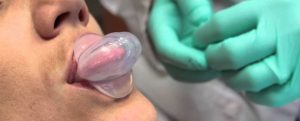
What it is: A tongue-retaining device (TRD) that uses gentle suction to hold your tongue slightly forward, rather than repositioning your jaw. It’s an excellent option if you’re exploring tongue-retaining devices.
How it works: By keeping the tongue from falling backward, it prevents one of the most common ways the airway narrows during sleep — without touching your teeth or jaw at all.
Who it’s best for: People who can’t use a MAD comfortably, including those with dentures, extensive dental work, TMJ issues, or a strong gag reflex to boil-and-bite trays.
What makes it different: Because it doesn’t rely on your teeth for retention, it sidesteps most of the dental concerns associated with jaw-advancement devices.
What We Like
- No molding process required
- A reasonable option for people who can’t wear a MAD
- Doesn’t put pressure on teeth or jaw joints
What to Consider
- The external bulb sits outside your lips, which some sleepers find awkward
- Not everyone finds the suction seal reliable through a full night
- Availability has been inconsistent on some retail platforms
Is it worth the price? For the specific group it’s designed for — non-MAD candidates — yes. It solves a real access problem for people who’d otherwise have no comfortable oral option.
Who should skip it: If a properly fitted MAD works for you already, a TRD usually isn’t a meaningful upgrade.
4. Mute by Rhinomed — Best Internal Nasal Dilator
NASAL CONGESTION
Mute by Rhinomed
An internal nasal dilator that widens passages from the inside, offering more support than external strips.
Ideal for structural nasal collapse or mild congestion.
What it is: A soft, flexible internal nasal stent that sits inside the nostrils rather than sticking to the outside of your nose.
How it works: It gently widens the nasal passages from the inside, which can reduce airflow resistance for people whose snoring is nasal in origin.
Who it’s best for: People with mild nasal collapse or congestion who want more airflow support than an external strip provides.
What makes it different: Internal dilators tend to hold the nasal valve open more effectively than external strips for people whose nostrils physically collapse inward during inhalation — a structural issue strips can’t fully address.
What We Like
- Reusable and adjustable to different sizes
- Discreet compared with external strips
- No adhesive required
What to Consider
- Takes some getting used to internally
- Won’t help snoring that originates in the throat or jaw
- Not a fit for a significantly deviated septum
Is it worth the price? Worth considering if you’ve already tried external strips without much success and your congestion feels structural rather than seasonal.
Who should skip it: Anyone with a diagnosed deviated septum severe enough to cause chronic obstruction should see an ENT rather than relying on an over-the-counter dilator.
5. Breathe Right Extra Strength — Best Budget Nasal Device
MILD CONGESTION
Breathe Right Extra Strength
A simple, inexpensive external nasal strip for mild, occasional congestion.
A low-risk first step for congestion-related snoring.
What it is: An external adhesive nasal strip, one of the most widely available and inexpensive anti-snoring products on the market.
How it works: The strip’s flexible bands sit on the outside of the nose and gently pull the nostrils open, reducing resistance to airflow.
Who it’s best for: People with mild, occasional nasal congestion — from allergies or a cold, for example — who want a low-cost, no-commitment option.
What makes it different: It’s the simplest device in this guide: no fitting, no adjustment, no learning curve.
What We Like
- Very inexpensive per use
- No fitting or adjustment period
- Widely available at pharmacies
What to Consider
- Effect is modest compared with internal dilators or mouthpieces
- Adhesive can irritate sensitive skin
- Does nothing for snoring caused by the tongue, jaw, or throat
Is it worth the price? As a low-risk first step for congestion-related snoring, yes. As a solution for snoring that clearly comes from the throat or jaw, no — it isn’t targeting the actual cause.
Who should skip it: If you’ve tried nasal strips consistently without any change in your snoring, that’s a sign the cause is likely somewhere other than your nose.
6. Smart Nora — Best Smart Anti-Snoring Device
NON-WEARABLE
Smart Nora
A non-wearable smart device that inflates your pillow to adjust head position when snoring is detected.
Perfect for those who can’t tolerate wearing mouthpieces or nasal devices.
What it is: A non-wearable system that uses a microphone to detect snoring, then gently inflates and moves an insert placed inside your existing pillow to shift your head position and stimulate throat muscles.
How it works: When it hears snoring, it responds with subtle pillow movement designed to naturally encourage a change in throat muscle tension — without fully waking you.
Who it’s best for: People who don’t want to wear anything in or on their body at night, including those who’ve struggled with mouthpieces or nasal devices.
What makes it different: It’s one of the only devices in this category that requires no contact with your face, mouth, or nose at all.
What We Like
- Nothing to wear
- App-based tracking of snoring patterns over time
- Works with a pillow you already own
What to Consider
- Effectiveness depends partly on mattress and pillow setup
- Requires a power source near the bed
- Not intended to treat sleep apnea
Is it worth the price? It’s a premium price point for a non-wearable option. Worth considering if wearable devices haven’t worked for you or you specifically want to avoid anything in your mouth or nose.
Who should skip it: People with diagnosed OSA shouldn’t treat this as a replacement for prescribed therapy — it isn’t designed or cleared for that purpose.
7. eXciteOSA — Best Daytime Neuromuscular Therapy Device
MILD OSA / DAYTIME USE
eXciteOSA
A prescription-only daytime device using electrical stimulation to improve tongue muscle tone for mild OSA.
Clinically documented option for those avoiding nighttime wearables.
What it is: A prescription-only device that delivers gentle electrical muscle stimulation to the tongue for 20 minutes a day while you’re awake, rather than something you wear during sleep.
How it works: The FDA cleared eXciteOSA based on clinical data showing that daily stimulation can improve tongue muscle function over about six weeks, which may help keep the tongue from collapsing backward during sleep. In the FDA’s review, a majority of patients in the studied group saw a meaningful reduction in the percentage of time spent snoring above a set volume threshold, and patients with mild OSA saw a reduction in their apnea-hypopnea index on average.
Who it’s best for: Adults with snoring or mild OSA who’d rather do a short daytime routine than wear something to bed, and who’ve discussed the option with a doctor.
What makes it different: It’s the only device on this list used while you’re awake instead of while you sleep, and it’s the only one authorized for mild OSA rather than snoring alone.
What We Like
- No nighttime wearable at all
- Backed by FDA clinical review specific to this device
- Doesn’t interfere with sleep position or a partner
What to Consider
- Prescription required
- Not intended for moderate or severe OSA
- Requires consistent daily use for six weeks before results are typically seen; not a fit for anyone with a pacemaker, certain dental hardware, or who is pregnant
Is it worth the price? For adults with confirmed mild OSA or bothersome snoring who want to avoid a nightly device, this is one of the more clinically documented options available. It costs more than an over-the-counter mouthpiece, which reflects the prescription pathway and clinical backing behind it.
Who should skip it: Anyone with moderate-to-severe OSA needs a treatment matched to that severity, typically CPAP or an oral appliance prescribed by a sleep specialist — not a mild-OSA device.
8. ZQuiet — Best Budget Oral Appliance
FIRST-TIME USERS
ZQuiet
A ready-to-wear, no-boil MAD with a flexible hinge, great for first-time users testing a mouthpiece.
A low-commitment entry point into oral appliances.
What it is: A pre-formed, no-boil MAD with a flexible hinge connecting the upper and lower trays.
How it works: Like other MADs, it advances the jaw slightly forward. The hinge allows some natural jaw movement and mouth opening, which some people find more comfortable than a rigid tray.
Who it’s best for: First-time mouthpiece users who want to try a MAD without a boil-and-bite fitting process or a big upfront cost.
What makes it different: It comes ready to wear out of the box in two sizes, with no molding step — useful if you want to test whether a MAD helps before committing to a more customized (and pricier) device.
What We Like
- No fitting process
- Lower price point than most MADs
- Hinge allows some jaw flexibility
What to Consider
- Less precise fit than a boil-and-bite or custom device
- Limited advancement adjustment compared with SnoreRx Plus or VitalSleep
- May not hold as securely for people with smaller jaws
Is it worth the price? As an entry point into oral appliances, yes. If it works well enough, you can always upgrade to a more adjustable device later. Read our ZQuiet review for a deeper look.
Who should skip it: If you already know you need fine-grained advancement control, a device like SnoreRx Plus will likely serve you better long-term.
9. SlumberBump — Best Positional Therapy Device
BACK-SLEEPERS
SlumberBump
A wearable belt designed to discourage back-sleeping, ideal for positional snoring.
A straightforward solution for gravity-induced snoring.
What it is: A wearable belt designed to discourage back-sleeping, worn around the waist or chest.
How it works: For many people, snoring is worse — or only happens — on their back, because gravity lets the tongue and soft palate fall backward into the airway. A positional device makes back-sleeping uncomfortable enough that you naturally shift to your side.
Who it’s best for: People who’ve noticed their snoring is clearly worse, or exclusive to, sleeping on their back.
What makes it different: It doesn’t touch your mouth, nose, or teeth at all — it works entirely by changing your sleep position.
What We Like
- No mouthpiece or nasal insert involved
- Straightforward to understand and use
- Useful add-on alongside another device rather than a replacement for one
What to Consider
- Does nothing for snoring that occurs regardless of position
- Some people find a waist or chest belt uncomfortable
- Takes time to adjust to a new sleep position
Is it worth the price? If position clearly matters for your snoring, it’s a low-cost, low-risk option worth trying before moving to an oral appliance.
Who should skip it: If you snore just as loudly on your side as on your back, positional therapy alone won’t solve the problem.
Match Your Device to Your Snoring Type
Rather than treating “best anti-snoring device” as a single answer, it helps to work backward from what’s actually happening while you sleep.
If you breathe through your mouth at night: Look for a MAD with a large front opening, like VitalSleep, or a hinge design like ZQuiet. Standard nasal dilators won’t help much if you’re not breathing through your nose in the first place — though it’s worth figuring out why you’re a mouth breather. Chronic nasal congestion is a common cause, and treating that directly may reduce snoring more than any mouthpiece.
If you have a small mouth or narrow jaw: A one-size-fits-all MAD can feel bulky or fail to seat properly. VitalSleep’s smaller sizing option and Good Morning Snore Solution’s tooth-free design are both worth considering. Adjustability and a low-profile tray matter more here than brand reputation.
If you’re a woman dealing with snoring: Fit tends to matter more than gender-specific marketing. Smaller jaw and mouth dimensions are common but not universal, so the same sizing considerations that apply to a small mouth generally apply here. Snoring during pregnancy is also common due to nasal swelling and hormonal changes, but new or worsening snoring during pregnancy is worth mentioning to your OB, since pregnancy is a known risk period for developing sleep apnea.
If you have a deviated septum: No mouthpiece corrects a structural nasal issue. An internal nasal dilator like Mute may help with mild cases, and external strips can help marginally, but persistent nasal obstruction is best evaluated by an ENT — treating the underlying blockage tends to help more than masking the snoring that results from it.
If your snoring happens mainly on your back: Positional therapy, like SlumberBump, addresses this directly and can be combined with another device rather than used as a replacement for one.
If you snore loudly, gasp, or feel exhausted despite a full night’s sleep: This combination is a signal to talk to a doctor about sleep apnea before choosing a device on your own. Some devices, like eXciteOSA and certain oral appliances, are appropriate for mild OSA, but that determination should come from a sleep evaluation, not guesswork.
Types of Anti-Snoring Devices, Explained
Mandibular Advancement Devices (MADs)
The most common oral appliance category. A MAD holds the lower jaw slightly forward, which increases space in the airway and reduces the soft-tissue vibration behind snoring. They’re adjustable, well studied, and generally effective for jaw- and throat-related snoring, but they aren’t ideal for people with TMJ disorders, loose teeth, extensive dental work, or a strong gag reflex.
Tongue-Retaining Devices (TRDs)
Instead of moving the jaw, a TRD holds the tongue forward using gentle suction, keeping it from falling back into the airway. TRDs are a reasonable alternative for people who can’t tolerate a MAD, though the external bulb design isn’t comfortable for everyone.
Nasal Dilators
These come in two forms: external strips that pull the nostrils open from outside the skin, and internal stents that widen the nasal passage from within. Both target nasal, not throat or jaw, snoring — they won’t help much if your airway is collapsing further down.
Positional Therapy Devices
Worn on the torso, these discourage back-sleeping for people whose snoring is position-dependent. They’re a helpful add-on for a specific subgroup of snorers rather than a general-purpose solution.
Smart Anti-Snoring Devices
“Smart” typically means the device includes sound detection, position tracking, or app connectivity to log your snoring over time and, in some cases, respond to it in real time. That data can be genuinely useful for understanding your own patterns, but the underlying mechanism — usually positional feedback — still matters more than the technology wrapped around it.
Daytime Neuromuscular Therapy Devices
A newer category, exemplified by eXciteOSA, that uses electrical muscle stimulation during the day to improve tongue muscle tone over several weeks, rather than intervening while you sleep. Currently cleared for snoring and mild OSA in adults, by prescription.
CPAP
Continuous positive airway pressure (CPAP) delivers pressurized air through a mask to keep the airway open all night. It’s not an “anti-snoring gadget” in the same category as the devices above — it’s the standard medical treatment for obstructive sleep apnea, prescribed after a sleep study, and it’s worth understanding as a point of comparison even though it’s outside the scope of over-the-counter snoring products. If you’re curious about snoring mouthpieces vs. CPAP, we have a dedicated comparison.
How Anti-Snoring Devices Work
Most devices in this category rely on one of a handful of mechanisms:
- Advancing the jaw to create more space in the airway (MADs)
- Holding the tongue forward so it can’t fall backward (TRDs)
- Opening the nasal passages to reduce airflow resistance (nasal dilators)
- Changing sleeping position to avoid gravity-related airway narrowing (positional therapy)
- Reducing mouth opening for snoring made worse by an open jaw
- Stimulating muscle tone during the day to improve airway support at night (neuromuscular devices)
- Delivering positive air pressure to physically hold the airway open all night (CPAP)
How to Choose the Best Anti-Snoring Device
Identify where your snoring likely starts. Nasal congestion, mouth breathing, tongue position, jaw structure, and sleep position all point toward different device categories.
Consider whether you breathe through your mouth. If so, prioritize a device with an open-front design or address the nasal congestion that’s forcing mouth breathing in the first place.
Think about your mouth and jaw size. A device that doesn’t fit well won’t stay in place, and discomfort is the number one reason people abandon anti-snoring devices within the first few weeks.
Check adjustability. For MADs especially, incremental adjustment lets you find the minimum effective advancement instead of guessing at a fixed setting.
Check the actual regulatory status. Don’t rely on “FDA approved” as a blanket marketing phrase — more on that below.
Look at the trial period and return policy. Most reputable brands offer 30 to 100 nights to test a device, which matters because comfort is often something you can’t judge until you’ve slept in it.
Consider your dental health. Loose teeth, dentures, TMJ problems, and a history of tooth movement are all reasons to talk to a dentist before starting a MAD. FDA guidance on intraoral snoring and OSA devices specifically flags dental soreness, TMJ dysfunction, and tooth movement as known risks of this device category.
FDA Clearance vs. FDA Approval: What You Need to Know
This is one of the most misunderstood parts of shopping for a snoring device, and it’s worth getting right.
FDA-cleared means a manufacturer showed the FDA that a device is substantially equivalent to a legally marketed device already on the market. Most oral appliances and nasal dilators for snoring go through this pathway, known as 510(k) clearance.
FDA-approved is a higher bar, generally reserved for higher-risk devices and drugs that go through a more rigorous premarket approval process. Most snoring devices are not “approved” in this specific sense, even though marketing copy sometimes uses the word loosely.
FDA-authorized shows up for devices cleared through the de novo pathway, used for novel devices without an existing equivalent — eXciteOSA is an example.
FDA-registered simply means a company has registered its facility with the FDA. It says nothing about whether a specific product has been reviewed for safety or effectiveness, and it’s sometimes used misleadingly to imply more regulatory oversight than actually exists.
The FDA’s device classification database lists intraoral snoring and OSA devices, including jaw-repositioning designs, under regulation 872.5570 as Class II devices. If a product’s regulatory status matters to you — and for anything you’re putting in your mouth or nose for eight hours a night, it should — it’s worth checking a device’s actual FDA listing rather than taking a badge on a product page at face value. For more on this, see our list of FDA-cleared snoring devices.
Do Anti-Snoring Devices Really Work?
Yes, for many people, but effectiveness depends heavily on matching the device to the cause of the snoring.
MADs and TRDs have reasonably strong evidence behind them for snoring caused by airway collapse at the throat or tongue level. Nasal dilators can meaningfully help snoring caused by nasal resistance, but they won’t touch snoring that originates further down the airway. Positional therapy works well for the specific group of people whose snoring is position-dependent, and does little for anyone else. CPAP remains the most consistently effective option for diagnosed OSA, though it requires a prescription and isn’t marketed as a general snoring gadget.
Where people tend to get disappointed is with generic, non-adjustable, “universal fit” mouthpieces that don’t account for jaw size, mouth breathing, or nasal congestion. A device that ignores the actual cause of your snoring is unlikely to fix it, regardless of price or marketing.
Best Anti-Snoring Solutions Beyond Devices
Devices aren’t the only lever available, and for some people, they aren’t even the most effective one.
- Sleeping on your side reduces gravity’s effect on the tongue and soft palate.
- Treating nasal congestion — from allergies, colds, or chronic sinus issues — can reduce or eliminate snoring that’s nasal in origin.
- Cutting back on alcohol close to bedtime helps, since alcohol relaxes throat muscles and makes airway collapse more likely.
- Weight management, where relevant, can reduce soft-tissue volume around the airway for some people.
- Managing allergies year-round rather than just during flare-ups keeps nasal passages clearer.
- Improving overall sleep habits — consistent schedule, less fragmented sleep — can reduce snoring severity indirectly.
- Addressing diagnosed sleep apnea through medical treatment rather than treating it as ordinary snoring.
- Quitting smoking, which irritates and inflames the airway and makes snoring more likely.
Anti-Snoring Device vs. CPAP
| Feature | Anti-Snoring Device | CPAP |
|---|---|---|
| Primary use | Snoring, or selected mild OSA cases | Diagnosed OSA |
| Requires electricity | Usually no | Usually yes |
| Portability | Usually excellent | Moderate |
| Mouthpiece or mask required | Sometimes (mouthpiece) | Yes (mask) |
| Prescription needed | Sometimes (varies by device) | Yes |
| Medical supervision | Depends on the device and condition | Generally important throughout use |
| Best suited for | Cause-dependent, non-severe cases | Diagnosed OSA of any severity |
These aren’t always interchangeable. An anti-snoring device that works well for simple snoring isn’t a substitute for CPAP in someone with moderate or severe OSA, and CPAP isn’t necessary for someone whose only issue is positional or nasal snoring.
Anti-Snoring Device vs. Mouth Tape
Mouth tape — designed to gently keep the lips closed during sleep to encourage nasal breathing — has become a popular low-cost snoring remedy. It may help people whose snoring is specifically tied to open-mouth breathing during sleep, but it isn’t right for everyone.
If nasal obstruction is forcing you to breathe through your mouth in the first place, taping your mouth shut doesn’t address that obstruction — it can make breathing harder rather than easier. Anyone with diagnosed or suspected sleep apnea should not use mouth tape as a stand-in for prescribed treatment; restricting mouth breathing without addressing the underlying airway collapse isn’t the same as treating OSA, and could be uncomfortable or unsafe for some sleepers. Mouth tape and an oral appliance solve different problems and aren’t equivalent products.
How to Use an Anti-Snoring Device
Proper usage is key to getting results from an anti-snoring device. Follow these steps:
- Read the manufacturer’s fitting instructions before your first use.
- Start with the least aggressive setting available, especially with an adjustable MAD.
- Give yourself several nights to adjust — most people don’t sleep perfectly with a new device on night one.
- Clean the device according to instructions; oral appliances in particular need regular cleaning to avoid bacterial buildup.
- Monitor for jaw or tooth discomfort as you increase adjustment.
- Stop using the device and check with a dentist or doctor if you notice significant pain, bite changes, or other concerning symptoms.
- Reassess after a couple of weeks — with input from a partner if possible — to see whether your snoring has actually improved.
Common Problems With Anti-Snoring Devices
Jaw pain is one of the most common complaints with MADs, usually from advancing the device too far too quickly.
Tooth or gum discomfort can happen with any device that anchors to the teeth, especially early on.
Excessive salivation is common with oral appliances, including neuromuscular devices like eXciteOSA, and typically decreases with continued use.
Dry mouth is more common with devices that encourage mouth breathing or don’t seal well.
Gagging affects some people with TRDs or larger oral appliances, particularly those with a sensitive gag reflex.
Device falling out during the night is a common early complaint, usually resolved by a better initial fit or a smaller size.
Snoring doesn’t improve — the most important “problem” of all, and usually a sign the device doesn’t match the actual cause of your snoring rather than a defect in the product itself.
FDA guidance on intraoral snoring and OSA devices recognizes several of these — dental soreness, TMJ dysfunction, obstruction of oral breathing, and tooth movement — as known risks associated with this device category, which is one more reason to involve a dentist if you plan to use a MAD or TRD long-term.
When Snoring Is a Sign You Should See a Doctor
Ordinary snoring and obstructive sleep apnea are not the same thing, and it’s worth knowing the difference before you shop for another device.
Talk to a doctor, ideally a sleep specialist, if you notice:
- Gasping or choking sounds during sleep
- Breathing pauses witnessed by a partner
- Excessive daytime sleepiness despite a full night in bed
- Morning headaches
- Difficulty concentrating during the day
- High blood pressure, especially if newly diagnosed
- Snoring that’s very loud or has been getting worse over time
- Insomnia or frequently fragmented sleep
Any of these, especially in combination, is a better reason to pursue a sleep evaluation than to buy another over-the-counter device. An OTC anti-snoring product isn’t designed to replace a diagnosis, and for moderate or severe OSA, it generally shouldn’t replace CPAP or a prescribed oral appliance either.
How We Evaluated These Devices
Our reviews are based on published manufacturer specifications, publicly available FDA clearance and classification records, independent studies where they exist, and a comparison of design details across competing products in each category — such as airflow openings for mouth breathers, adjustment range for MADs, and sizing options for smaller jaws and mouths. We looked at:
- Snoring reduction potential based on device mechanism and available evidence
- Comfort and fit, including sizing options
- Adjustability
- Ease of use and cleaning
- Compatibility with mouth breathing, where relevant
- Materials and durability
- Return policy and warranty
- Regulatory status and, where applicable, sleep apnea suitability
Where our review references specific clinical findings — such as the data behind eXciteOSA’s FDA clearance — those figures come from publicly available FDA and peer-reviewed sources, which we distinguish from manufacturer marketing claims throughout this guide.
Frequently Asked Questions
What is the best anti-snoring device?
There isn’t one universal answer. SnoreRx Plus is a strong overall pick for jaw-related snoring, but the right device depends on whether your snoring is nasal, jaw-related, positional, or tied to mouth breathing.
What is the best snoring device for mouth breathers?
VitalSleep’s larger front airflow opening and ZQuiet’s flexible hinge both accommodate mouth breathing better than a fully closed MAD.
What is the best anti-snoring device for sleep apnea?
This depends on OSA severity and should be guided by a sleep specialist. eXciteOSA is FDA-cleared for snoring and mild OSA specifically; moderate to severe OSA typically calls for CPAP or a prescribed oral appliance instead.
Do anti-snoring devices really work?
Many do, provided they match the actual cause of your snoring. A nasal dilator won’t fix jaw-related snoring, and a MAD won’t fix a deviated septum.
Are anti-snoring devices safe?
Generally yes, for people without underlying dental, jaw, or airway conditions that would make a specific device inappropriate. Anyone with TMJ issues, loose teeth, dentures, or suspected sleep apnea should check with a doctor or dentist before starting one.
Are there FDA-approved snoring devices?
Most snoring devices are FDA-cleared rather than “approved” in the strict regulatory sense; eXciteOSA is FDA-authorized through the de novo pathway. The distinction matters more than it might seem, since it reflects a different level of regulatory review.
What is the best snoring device for women?
Fit matters more than gender-specific marketing. Devices with smaller sizing options, like VitalSleep, tend to be more relevant than products marketed specifically “for women.”
What is the best anti-snoring device for a small mouth?
Look for adjustable, low-profile MADs with multiple sizing options, or a tongue-retaining device that doesn’t rely on a full dental impression.
What is the best anti-snoring device for a deviated septum?
No device corrects the underlying structural issue. An internal nasal dilator may offer modest relief, but a persistent deviated septum is best evaluated by an ENT.
Is a mouthpiece better than a nasal dilator for snoring?
It depends entirely on where your snoring originates. Mouthpieces address jaw- and tongue-related snoring; nasal dilators address nasal resistance. Many people benefit more from correctly diagnosing the cause than from choosing between these two categories at random.
Can an anti-snoring device cure sleep apnea?
Some devices, used appropriately and under medical guidance, can meaningfully reduce mild OSA. None should be treated as a self-directed cure for moderate or severe OSA, which typically requires CPAP or a prescribed oral appliance.
Can I use an anti-snoring device if I breathe through my mouth?
Yes, but choose one designed for it — an open-front MAD, a hinge-style device, or an approach that also addresses the nasal congestion causing the mouth breathing in the first place.
Final Verdict: Which Is the Best Anti-Snoring Device?
There’s no single best anti-snoring device — only the best one for the cause of your snoring.
- Best overall: SnoreRx Plus
- Best for mouth breathers: VitalSleep
- Best tongue-retaining device: Good Morning Snore Solution
- Best internal nasal dilator: Mute by Rhinomed
- Best budget nasal option: Breathe Right Extra Strength
- Best smart device: Smart Nora
- Best daytime therapy for snoring and mild OSA: eXciteOSA
- Best budget oral appliance: ZQuiet
- Best positional therapy device: SlumberBump
If you’re still not sure where to start, work backward from the section above that matches your situation — mouth breathing, small mouth, nasal congestion, or position-dependent snoring — rather than picking based on price or star rating alone. And if your snoring comes with gasping, witnessed breathing pauses, or daytime exhaustion, a conversation with a doctor is a better next step than another product purchase.
Ready to Quiet the Noise?
Find the right anti-snoring solution for your specific needs and start sleeping more peacefully tonight.