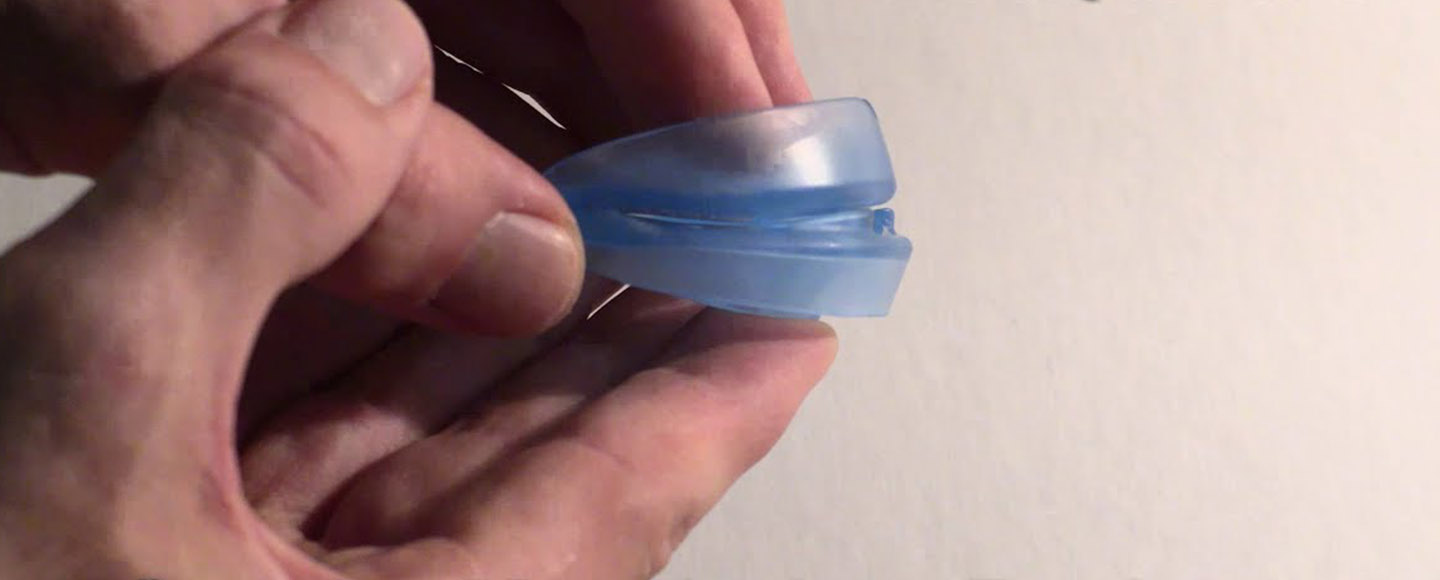
Quick Verdict: ZQuiet Mouthpiece
Our Verdict: ZQuiet is one of the more convenient over-the-counter mandibular advancement devices (MADs) for people looking to reduce ordinary snoring. Its no-molding design and flexible hinge make it easier to use than many boil-and-bite mouthpieces, but comfort and effectiveness can vary from person to person. It is not a substitute for a sleep apnea diagnosis or treatment.
Who benefits most: Adults with occasional to moderate snoring who want a low-effort, no-appointment option.
Who should look elsewhere: Anyone with diagnosed or suspected sleep apnea, significant dental issues, or a preference for a mouthpiece with finer adjustment control.
ZQuiet is an over-the-counter mandibular advancement device, or MAD, designed to reduce ordinary snoring by holding your lower jaw slightly forward while you sleep. It’s one of the more convenient options in this category because it skips the boiling and molding process that many competing mouthpieces require.
For many sleepers, that convenience is the main draw. You take it out of the box, pick a size, and wear it that same night. But convenience and comfort aren’t always the same thing, and effectiveness depends a lot on why you snore in the first place.
Based on our evaluation of customer feedback, independent testing, and the product’s own documentation, ZQuiet works reasonably well for mild to moderate snoring caused by jaw position and tongue collapse. It is not designed to treat obstructive sleep apnea, and it won’t help if your snoring comes from nasal congestion or a source unrelated to jaw positioning.
Our Verdict: ZQuiet is one of the more convenient over-the-counter mandibular advancement devices for people looking to reduce ordinary snoring. Its no-molding design and flexible hinge make it easier to use than many boil-and-bite mouthpieces, but comfort and effectiveness can vary from person to person. It is not a substitute for a sleep apnea diagnosis or treatment.
Who benefits most: adults with occasional to moderate snoring who want a low-effort, no-appointment option.
Who should look elsewhere: anyone with diagnosed or suspected sleep apnea, significant dental issues, or a preference for a mouthpiece with finer adjustment control.
ZQuiet Reviews: What Are Customers Saying?
ZQuiet’s own review page displays a large volume of customer feedback, and the majority of those ratings are positive. That’s worth noting, but it’s also worth keeping in mind that first-party review pages tend to skew favorable, since businesses control which reviews get published and how prominently. Independent platforms like Trustpilot show a more mixed picture, with comfort and adjustment period coming up often in both praise and complaints.
What Customers Like About ZQuiet
- Noticeable reduction in snoring, especially for people whose snoring is tied to jaw position
- No boiling, biting, or molding required before first use
- Simple setup compared with custom-fit alternatives
- Two jaw-advancement sizes to choose from
- Low-profile design that some users find easier to sleep in than bulkier mouthguards
- Compact enough to travel with
What Customers Don’t Like
- Initial discomfort or a strange sensation in the first several nights
- Jaw soreness or tooth pressure, particularly with the stronger advancement setting
- Increased saliva production, which some users describe as drooling
- A noticeable adjustment period before the device feels normal to wear
- Inconsistent results — some users see a big improvement, others very little
- Ongoing replacement costs as the mouthpiece wears down
Are ZQuiet Reviews Reliable?
First-party reviews are useful for getting a general sense of satisfaction, but they should be read with some caution since they aren’t independently verified or moderated by a neutral third party. Independent reviews, including sleep-focused publications and consumer review sites, tend to surface more of the drawbacks.
A negative review doesn’t automatically mean the product is flawed. Mouthpieces like ZQuiet depend heavily on individual jaw shape, bite alignment, and the underlying cause of someone’s snoring. One person’s poor fit can be another person’s perfect fit. In practice, the most useful approach is to weigh the pattern across many reviews rather than any single account.
ZQuiet Mouthpiece Review: What Is It and How Does It Work?
ZQuiet belongs to a category of devices called mandibular advancement devices. These work by shifting the lower jaw slightly forward, which helps keep the airway more open during sleep.
How the ZQuiet Mouthpiece Works
- The device holds your lower jaw in a forward position relative to your upper jaw.
- This forward positioning can create more space in the upper airway.
- With less narrowing in that space, there’s less tissue vibration, which is what produces the sound of snoring.
The Sleep Foundation classifies ZQuiet as an over-the-counter MAD and notes that it’s backed by a 60-day guarantee, with options to buy single mouthpieces or subscribe for a discount off the regular price. The device’s flexible “living hinge” connects the upper and lower trays, which is part of what lets you skip the molding step most competitors require.
ZQuiet Size 1 vs. Size 2
| Feature | Size 1 | Size 2 |
|---|---|---|
| Jaw advancement | Less | More |
| Intended use | Lighter to moderate snoring, or an overbite | Heavier snoring, or an underbite |
| Adjustment | Lower | Greater |
| Best for | People wanting a gentler starting point | People needing more advancement |
These are manufacturer recommendations based on general bite type, not a clinical fitting. If you’re unsure which size fits your bite, starting with Size 1 and moving up is generally the lower-friction choice.
The Living Hinge Limitation
One thing worth understanding before you buy: ZQuiet’s design offers exactly two fixed advancement levels. There’s no middle ground. If Size 1 doesn’t advance your jaw enough and Size 2 feels like too much, you don’t have a way to dial in something in between. Devices like SnoreRx and VitalSleep use incremental adjustment — sometimes in millimeter increments — which gives you more precise calibration. That flexibility comes at the cost of a boil-and-bite fitting process, so it’s a genuine trade-off rather than one device simply being better than the other.
ZQuiet Pros and Cons
Pros
- Ready to use out of the box, with no boiling or molding
- Flexible hinge design that some users find more comfortable than rigid frames
- Two adjustment levels to choose from
- Relatively affordable compared with a custom dental appliance
- 60-night guarantee
- Available without a prescription
Cons
- May take several nights to get used to
- Not comfortable for everyone, particularly people with a narrow jaw or sensitive gums
- Can cause jaw or tooth discomfort, especially early on
- Effectiveness varies depending on the cause of your snoring
- Requires regular cleaning to stay hygienic
- No incremental adjustment between the two preset sizes
- Not a substitute for diagnosis or treatment of sleep apnea
Does ZQuiet Really Work?
Mandibular advancement devices as a category have a reasonable evidence base for reducing snoring in people whose snoring stems from airway narrowing related to jaw or tongue position. That’s different from saying ZQuiet specifically has been proven in controlled studies — most of what’s available on ZQuiet itself is customer-reported outcomes rather than independent clinical trials.
How Effective Is ZQuiet for Snoring?
Customer reports suggest it works well for a meaningful share of users with mild to moderate snoring. Results are less consistent for heavier snoring or snoring with multiple contributing causes.
How Long Does It Take ZQuiet to Work?
Some users notice a difference the first night. For most people, though, there’s a distinction between three phases: getting used to sleeping with something in your mouth, finding the right size and fit, and seeing a stable, repeatable reduction in snoring. That full process can take one to two weeks.
Why Might ZQuiet Not Work for You?
There are several reasons a MAD like ZQuiet might not deliver the results you’re hoping for, and most of them come down to snoring having more than one possible cause:
- Nasal obstruction, such as allergies or a deviated septum, which a jaw-based device can’t address
- Sleeping position — back sleeping tends to worsen snoring regardless of mouthpiece use
- Alcohol or sedative use before bed, which relaxes throat muscles
- Anatomy that limits how much benefit jaw advancement provides
- Severe airway obstruction, which may require a different treatment approach entirely
- An incorrect size or fit for your bite
- Insufficient jaw advancement for your particular anatomy
- Snoring caused by tissue vibration higher in the throat rather than jaw position
If you’ve tried ZQuiet correctly and consistently and still aren’t seeing results, that’s a sign to talk to a doctor rather than to assume the device is simply low quality.
ZQuiet Complaints and Health Considerations
This section covers the most common complaints, along with the physical and dental considerations worth knowing about before you buy.
Is ZQuiet Uncomfortable?
Some initial discomfort is common and often fades as your mouth adjusts. Ongoing discomfort that doesn’t improve after a week or two is a signal to reconsider the size or the device altogether.
Can ZQuiet Cause Jaw Pain?
Jaw soreness is one of the more frequently reported issues, particularly with Size 2 or during the first several nights of use. It typically shows up as mild stiffness rather than sharp pain. Persistent or worsening jaw pain isn’t something to push through — it’s worth taking a break and, if it continues, talking to a dentist.
Can ZQuiet Affect Your Teeth?
This is one of the more important things to understand about MADs in general, not just ZQuiet specifically. Long-term, nightly use of a jaw-advancement device can gradually shift tooth position or change your bite over months or years — something dentists sometimes call occlusal drift. It’s a slow, cumulative effect rather than something that happens overnight, and it’s more relevant for people who use a MAD every night for years on end rather than occasionally.
People who should generally avoid OTC mandibular advancement devices, or should only use one under a dentist’s supervision, include those who have:
- Loose or compromised teeth
- Full or partial dentures
- Severe TMJ (jaw joint) disorders
- Active periodontal (gum) disease
- Ongoing orthodontic treatment, such as braces or aligners
If any of these apply to you, it’s worth having a conversation with a dentist before trying any OTC mouthpiece, not just ZQuiet.
Does ZQuiet Cause Excess Saliva?
Increased saliva, and occasional drooling, is a commonly reported side effect during the adjustment period. For most users it tends to settle down within the first couple of weeks.
Does ZQuiet Fall Out While Sleeping?
Some users report the device shifting or coming loose overnight, particularly if the size doesn’t match their bite well. A properly sized mouthpiece should stay in place through normal movement.
How Long Does ZQuiet Last?
ZQuiet’s standard mouthpiece is generally intended to be replaced every three to four months with regular use, and a bit sooner if you tend to clench or grind your teeth. ZQuiet also sells a Firm model built with a stiffer material and reinforced hinge specifically for people who clench or grind, which may hold up longer under that kind of wear.
How to Clean ZQuiet the Right Way
Rinse the mouthpiece after every use, and clean it regularly with mild soap and warm water using a soft toothbrush. Avoid toothpaste. It seems like an obvious cleaning choice, but most toothpaste contains mild abrasives meant for tooth enamel. On a soft plastic mouthpiece, those abrasives can create tiny scratches, and those scratches give bacteria more surface area to collect in. Over time, that undermines both hygiene and the smoothness of the fit. Let the device air dry fully and store it in its case rather than a closed, damp container.
ZQuiet also sells its own cleaning solution and accessories, such as nasal dilators. These aren’t required to use the mouthpiece effectively — soap, water, and a toothbrush are enough for routine care — but some users find the dedicated cleaner more convenient for a deeper clean.
ZQuiet and Sleep Apnea: Can You Use It?
This is one of the most important questions to get right, because the stakes of getting it wrong are higher than comfort or cost.
Is ZQuiet FDA Cleared?
Some sources describe ZQuiet’s standard mouthpiece as an FDA 510(k)-cleared device for snoring. That clearance pathway for an OTC snoring device is different from the clearance or prescription process required for a device intended to treat obstructive sleep apnea (OSA). It’s worth confirming current clearance details directly on ZQuiet’s website before relying on this for a medical decision.
Does ZQuiet Treat Sleep Apnea?
The standard, over-the-counter ZQuiet mouthpiece is marketed and designed for snoring, not as a treatment for diagnosed sleep apnea. Separately, custom oral appliances fitted by a dentist — sometimes made by the same manufacturer — can be part of a legitimate OSA treatment plan when prescribed and monitored by a doctor. That’s a meaningfully different product and process than buying a retail mouthpiece online.
Is ZQuiet Safe for People With Sleep Apnea?
If you have diagnosed or suspected sleep apnea, using an OTC snoring mouthpiece on your own, without medical guidance, isn’t a safe substitute for proper diagnosis and treatment. Sleep apnea carries real cardiovascular and cognitive risks if it goes untreated, and a snoring mouthpiece isn’t built or tested to manage those risks.
ZQuiet vs. CPAP for Sleep Apnea
CPAP remains the standard, medically supervised treatment for moderate to severe obstructive sleep apnea. It works differently from a MAD — using continuous air pressure to keep the airway open rather than repositioning the jaw — and it’s prescribed after a sleep study confirms a diagnosis. A snoring mouthpiece like ZQuiet isn’t designed as a CPAP alternative for anyone with diagnosed OSA. If you’re exploring alternatives, our guide to over-the-counter CPAP alternatives can help you understand the landscape.
When Should You See a Doctor About Snoring?
Consider talking to a doctor if you experience loud, frequent snoring along with gasping or choking during sleep, excessive daytime fatigue, morning headaches, or a partner noticing pauses in your breathing. These are signs that your snoring could be linked to sleep apnea rather than simple, positional snoring — and that’s a situation where a sleep study, not a mouthpiece, is the right next step. For more information, see our guide to sleep apnea symptoms and treatments.
This article is for general informational purposes and isn’t a substitute for medical advice. If you suspect sleep apnea, talk with a doctor or sleep specialist.
ZQuiet vs. Other Anti-Snoring Mouthpieces
| Feature | ZQuiet Standard | SnoreRx | VitalSleep | ZQuiet Advance |
|---|---|---|---|---|
| Type | Fixed-hinge MAD | Micro-adjustable MAD | Micro-adjustable MAD | Custom-moldable MAD |
| Molding required | No, ready to wear | Yes, boil-and-bite | Yes, boil-and-bite | Yes |
| Adjustment style | Two preset sizes | Incremental, roughly 1mm steps | Screwdriver-based adjustment | Strap-based adjustment |
| Material | Soft, flexible living hinge | More rigid frame | Semi-flexible | Flexible base |
| Best for | People who want no fitting process | People who want precise, incremental tuning | People who want moderate customization | People who want a custom fit without a dentist visit |
Prices, guarantees, and promotions change often across all of these brands, so it’s worth double-checking current figures on each company’s site before you buy. For a deeper dive, read our comparison of Zyppah vs. SnoreRx or SnoreRx vs. ZQuiet.
ZQuiet Standard vs. ZQuiet Advance: Which Should You Choose?
ZQuiet sells its original ready-to-wear mouthpiece alongside a separate model called ZQuiet Advance Custom, which includes a moldable mouthpiece and adjustable straps for a more personalized fit.
ZQuiet Standard is the simpler, faster option. There’s no molding step, and it’s the lower-cost entry point into the ZQuiet lineup.
ZQuiet Advance trades some of that simplicity for a closer, more custom fit, at a higher price point.
Which is better for you? If you want to try a MAD with minimal setup and don’t mind a fixed fit, start with the Standard. If you’ve already tried a basic MAD and want more precise fit and adjustability, Advance is worth considering.
How Much Does ZQuiet Cost?
As of this writing, ZQuiet’s standard single mouthpiece is priced at $39.95, with a starter pack that bundles both sizes running higher but at a discount compared with buying two separately. The Firm model and ZQuiet Advance are priced above the standard mouthpiece. ZQuiet also offers a subscription option with a discount off the regular price for recurring replacement mouthpieces, and the company periodically runs sitewide promotions.
Because the mouthpiece typically needs replacing every three to four months, it’s worth thinking about total annual cost rather than just the upfront price. Depending on how often you replace it, ongoing costs can add up to noticeably more than the initial purchase over a year.
ZQuiet also offers HSA and FSA eligibility for some products, which can offset part of the cost if your plan qualifies.
Watch Out for These Refund Gotchas
The 60-night guarantee is a genuine selling point, but the fine print matters. In some checkout flows, ZQuiet’s guarantee excludes shipping and handling fees from the refund, and any separate trial fee charged at signup may be non-refundable. Read the return terms at checkout carefully before you buy, especially if you’re using a subscription or trial offer rather than a straightforward one-time purchase. Confirming these details directly on ZQuiet’s site before ordering will save you from an unpleasant surprise if the device doesn’t work out.
Where to Buy ZQuiet
Buy From the Official Website
Buying directly from ZQuiet’s site is the most straightforward way to make sure you’re getting the current guarantee terms, the latest models, and any active promotions.
Can You Buy ZQuiet on Amazon?
ZQuiet products do appear on Amazon in some listings. If you go this route, check that the listing is sold and shipped by an authorized seller, and compare the price and return policy against the official site before purchasing.
Should You Buy ZQuiet From Third-Party Sellers?
Buying from a marketplace or reseller outside of ZQuiet’s official channels carries some risk. You may lose access to the official guarantee, run into authenticity questions, or receive older stock. If price is the deciding factor, it’s worth weighing any savings against the loss of a straightforward return process.
ZQuiet Anti-Snoring Mouthpiece
A convenient, ready-to-use MAD for mild to moderate snoring. No boiling or molding required.
How to Use the ZQuiet Mouthpiece
- Choose the correct size. Start with Size 1 if you have an overbite or lighter snoring, and Size 2 if you have an underbite or heavier snoring.
- Insert the mouthpiece. Place it over your upper and lower teeth, letting the living hinge settle naturally.
- Start with shorter wear periods. Wearing it for an hour or two while awake before your first full night can help you adjust.
- Sleep with it. Wear it through the night once you’re comfortable with the fit.
- Monitor comfort and snoring. Track how your jaw feels in the morning and whether a partner notices a difference in snoring.
- Clean it after use. Rinse and wash it each morning to keep it hygienic and extend its life.
Because it’s ready to wear, ZQuiet skips the boiling and molding step used by many traditional mouthpieces, which is one of the main reasons people choose it over boil-and-bite alternatives.
Who Should Buy ZQuiet?
Good fit for:
- Adults with ordinary, occasional to moderate snoring
- People who want an OTC MAD without a dentist visit
- People who’d rather skip boil-and-bite fitting
- Frequent travelers who want something compact
- People looking for a lower-cost alternative to a custom oral appliance
May not be ideal for:
- People with significant dental problems, loose teeth, or dentures
- People with TMJ or other jaw joint issues
- People undergoing orthodontic treatment
- People who can’t tolerate anything in their mouth overnight
- People with suspected or diagnosed sleep apnea
- People who want fine, incremental adjustment rather than two fixed sizes
Is ZQuiet Worth It?
| Category | Rating |
|---|---|
| Snoring reduction | ★★★★☆ |
| Comfort | ★★★★☆ |
| Ease of use | ★★★★★ |
| Adjustability | ★★★☆☆ |
| Cleaning | ★★★★☆ |
| Durability | ★★★★☆ |
| Value | ★★★★☆ |
| Overall | ★★★★☆ |
These are SleepDeeper’s editorial ratings based on our evaluation of customer feedback, independent reviews, and the product’s own documentation — not clinical measurements.
Final Take
Our Final Recommendation
Best for: people who want a simple, ready-to-use anti-snoring mouthpiece and don’t want to deal with molding or fitting.
Skip it if: you have suspected or diagnosed sleep apnea, significant dental concerns, or you know you’ll want finer adjustment than two fixed sizes allow.
Worth considering: yes, particularly if convenience and ease of fitting matter more to you than having a fully custom oral appliance. If your biggest concern is mask-free relief from occasional snoring, this is one of the more accessible options to try, backed by a guarantee that limits your downside if it doesn’t work out for you.
ZQuiet Reviews FAQs
Does ZQuiet really work?
For many people with mild to moderate snoring related to jaw position, yes. Results vary based on the underlying cause of your snoring.
Is ZQuiet safe?
For most healthy adults without significant dental or jaw issues, it’s generally considered safe for occasional to nightly use. People with dental conditions, TMJ disorders, or suspected sleep apnea should check with a doctor or dentist first.
Does ZQuiet help with sleep apnea?
The standard ZQuiet mouthpiece is designed and marketed for snoring, not as a sleep apnea treatment. Talk to a doctor if you suspect sleep apnea.
How much does ZQuiet cost?
The standard single mouthpiece is priced at $39.95, with starter packs, subscriptions, and other models priced differently. Confirm current pricing on ZQuiet’s website before buying.
Where can I buy ZQuiet?
Directly from ZQuiet’s official website is the most reliable option for current pricing, guarantee terms, and authentic products.
Is ZQuiet better than SnoreRx?
Neither is universally better. ZQuiet skips the molding process and is simpler to start using; SnoreRx offers more precise, incremental adjustment. The right choice depends on whether you prioritize convenience or fine-tuned fit.
Is ZQuiet uncomfortable?
Some initial discomfort is common in the first week or two. Persistent discomfort after that point usually means the size or fit isn’t right for you.
How long does ZQuiet last?
The standard mouthpiece is generally meant to be replaced every three to four months with regular use.
Can ZQuiet damage your teeth?
Long-term nightly use of any MAD, including ZQuiet, can gradually shift tooth position over months or years. This is a known consideration with the entire device category, not unique to ZQuiet.
Can you use ZQuiet every night?
Yes, it’s designed for nightly use, though people with certain dental or jaw conditions should check with a dentist first.
Does ZQuiet require a prescription?
No, it’s sold over the counter without a prescription.
Can you talk while wearing ZQuiet?
Not clearly — like most mandibular advancement devices, it’s meant to be worn while sleeping, and speaking with it in is difficult.
Ready to Try ZQuiet?
If this mouthpiece matches your sleeping style and the type of snoring you’re dealing with, it’s worth checking the current price and guarantee terms on ZQuiet’s official site before deciding.
If this mouthpiece matches your sleeping style and the type of snoring you’re dealing with, it’s worth checking the current price and guarantee terms on ZQuiet’s official site before deciding.

I note in your comment that if you have a crown it poses as a health risk. Can you explain this to me please, as I only have one tooth that has been capped.
Hey Karen,
When you wear Zquiet, it advances the jaw by pushing out on lower six front teeth while applying inward pressure on the upper front teeth. Therefore, it is best for anyone that has strong upper and lower front teeth. If you wear full dentures or have loose or missing teeth, particularly in the front, wearing Zquiet can lead to loosening of the teeth and may compromise the health of the surrounding ones.
People with bridges or crowns located at the rear of the gums would certainly be a better candidate than those who’ve had work done on the front teeth. For your case, if the capped tooth is at the rear, you can use Zquiet. However, if it’s at the front, I would recommend a Tongue Stabilizing Device (TSD) like Good Morning Snore Solution (GMSS) [Check it Here] as the TSDs do not rely on the teeth to be held in place.