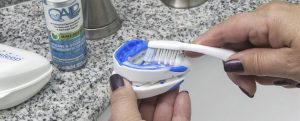
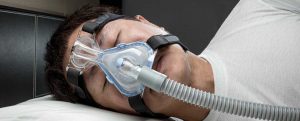
Zyppah and SnoreRx are two of the most talked-about over-the-counter anti-snoring mouthpieces, and they solve the problem in different ways. SnoreRx is a mandibular advancement device (MAD) that moves your lower jaw forward in small, adjustable increments. Zyppah does that too, but it also adds an elastic strap that holds your tongue in place, designed for snoring caused by the tongue collapsing toward the back of the throat.
That mechanical difference matters more than most comparison pages let on. If you pick based on price or star ratings alone, you can end up with a device that doesn’t match the reason you snore in the first place. This guide walks through how each one works, who tends to do well with each design, and where the trade-offs are — including a few details, like gag reflex and mouth breathing, that often get left out.
Prices and policies checked September 2026 — always confirm current figures on the manufacturer’s site before buying.
- Quick Verdict
- Zyppah vs SnoreRx at a Glance
- The Fundamental Difference: Dual-Action vs. Adjustable Advancement
- Design, Jaw Mobility, and Mouth Breathing
- Comfort and Real-World Usability
- Custom Fitting and Adjustability
- Who Should Buy Which? A Decision Framework
- Three-Way Comparison: ZQuiet vs. Zyppah vs. SnoreRx
- Sleep Apnea and Medical Disclaimers
- Price, Return Policies, and Value
- Zyppah vs SnoreRx: Pros and Cons
- Frequently Asked Questions
- Final Verdict: Zyppah vs SnoreRx
Quick Answer: For most first-time buyers, SnoreRx is the stronger overall pick thanks to its precise, incremental jaw adjustment and forgiving comfort. But if your snoring is driven by your tongue falling backward — especially when sleeping on your back — Zyppah’s hybrid tongue-retaining design targets a problem SnoreRx doesn’t address.
Quick Verdict
| Category | Winner |
|---|---|
| Best overall for most first-time buyers | SnoreRx |
| Best for tongue-related snoring | Zyppah |
| Best adjustability | SnoreRx |
| Best for lateral jaw movement / mouth breathing | SnoreRx Plus |
| Easier gag-reflex adjustment | SnoreRx |
| Longer return window | Zyppah (91-day guarantee vs. SnoreRx’s 30-night trial) |
| Best value at the lower price point | SnoreRx Standard |
One thing to keep in mind: neither device is a universal fix. The right pick depends on what’s causing your snoring, how sensitive your gag reflex is, and whether you tend to breathe through your mouth at night. For a broader look at options, see our guide to the best anti-snoring mouthpieces.
Zyppah vs SnoreRx at a Glance
| Feature | Zyppah | SnoreRx |
|---|---|---|
| Device type | Hybrid MAD + tongue-retaining strap | Mandibular advancement device (MAD) |
| How it works | Advances the jaw and holds the tongue forward with an elastic band | Advances the jaw using a calibrated dial |
| Jaw adjustment | Limited, less granular | Adjustable in small increments (Standard and Plus) |
| Lateral/vertical jaw movement | Not supported | Standard: no. Plus: yes, via a hinge |
| Tongue retention | Yes | No |
| Custom fitting | Boil-and-bite | Boil-and-bite (thermal matrix) |
| Mouth breathing | More restrictive | Standard: restrictive. Plus: more accommodating |
| Guarantee | 91-day return window | 30-night trial |
| Price range | Roughly $90–$100 | Standard roughly $60, Plus roughly $100 |
| Best for | Tongue-driven snoring, MAD “graduates” | First-time buyers, precise adjustment, mouth breathers (Plus) |
This table covers the essentials, but a few of these differences deserve more explanation before you decide — especially the SnoreRx Standard vs. Plus question and how each device handles mouth breathing.
The Fundamental Difference: Dual-Action vs. Adjustable Advancement
How Zyppah Works
Zyppah is built around two mechanisms working together. Like a standard MAD, it holds your lower jaw in a slightly forward position, which helps keep your airway from narrowing while you sleep. Added to that is an elastic strap that wraps around the tip of the tongue and holds it forward, away from the back of the throat.
This hybrid approach is designed for snoring that’s driven by the tongue falling backward during sleep, not just jaw position. If you sleep on your back and tend to snore loudest in that position, tongue collapse is often part of the picture, and that’s the scenario where Zyppah’s design has a clearer purpose. For more on this mechanism, see our breakdown of tongue retaining devices.
How SnoreRx Works
SnoreRx focuses entirely on jaw advancement, but it does it with more precision than most similar devices. After a boil-and-bite fitting, you can move the lower tray forward or backward in small, measured steps — commonly marketed in roughly 1-millimeter increments. That lets you start with a modest amount of advancement and increase it gradually if needed, rather than locking in one fixed position.
SnoreRx Standard vs. SnoreRx Plus: Which Model Are We Comparing?
This is where a lot of comparison articles get sloppy. SnoreRx actually sells two versions, and they’re not interchangeable.
- SnoreRx Standard (roughly $60): calibrated jaw advancement, boil-and-bite fit, no lateral movement.
- SnoreRx Plus (roughly $100): the same calibrated advancement system, plus a hinge that allows some side-to-side and vertical jaw movement — closer to Zyppah’s price point.
Because Zyppah sits closer to $100, the more useful comparison for a lot of shoppers is Zyppah vs. SnoreRx Plus, not Zyppah vs. the base SnoreRx. Throughout this guide, sections about adjustability apply to both SnoreRx versions, while jaw mobility and mouth-breathing sections are specific to the Plus model. Worth considering: if budget is your priority, the Standard model still delivers the core adjustable-advancement benefit for less money. You can dive deeper in our SnoreRx Plus review.
Design, Jaw Mobility, and Mouth Breathing
Zyppah’s Rigid Tongue-Restraint System
Zyppah’s tongue strap only works if the jaw stays in a fixed position, so the device is designed to hold your mouth mostly closed and immobile. That’s part of what makes the tongue component effective, but it also means there’s little room for jaw movement during the night.
SnoreRx’s Positional Hinge (Plus Model) and Flex
The Standard SnoreRx also locks the jaw in a fixed forward position. The Plus model is different: its hinge lets the jaw shift slightly from side to side or drop open a bit, which can matter for comfort and for people who grind their teeth.
Can You Breathe Through Your Mouth?
Common concern: Because Zyppah and the Standard SnoreRx hold the jaw rigidly closed, mouth breathing is more restricted with both. If you regularly breathe through your mouth at night — due to nasal congestion, allergies, or habit — the SnoreRx Plus is designed to accommodate more airflow through its hinge design.
For mouth breathers, the SnoreRx Plus is worth considering over Zyppah or the base SnoreRx for that reason. For most sleepers who breathe through the nose without issue, this distinction matters less. You can also explore our roundup of the best anti-snoring devices for mouth breathers.
Comfort and Real-World Usability
Comfort determines whether a device actually gets used every night, so it deserves its own section rather than a single line in a features list.
The Gag Reflex Factor
This is arguably the biggest Zyppah-specific concern, and it comes up often in searches like “does Zyppah make you gag.” The elastic tongue strap sits toward the back third of the tongue, and for some users that triggers a gag reflex, especially during the first three to seven nights. In practice, many people report that the sensation fades with repeated use, but it’s a real adjustment period that SnoreRx users typically don’t face, since SnoreRx doesn’t include a tongue component at all.
If you have a sensitive gag reflex, this is one drawback worth weighing seriously before choosing Zyppah.
Morning Jaw Soreness and Adjustment Periods
Both devices can cause some jaw stiffness in the first week or two, which is common with mandibular advancement in general. Based on our evaluation of how each device is designed, SnoreRx’s incremental adjustment makes it easier to dial back the advancement if soreness shows up, since you can lower the setting by a small amount rather than removing the device entirely. Zyppah’s advancement is less granular, so there’s less room to fine-tune your way out of discomfort.
Teeth Grinding (Bruxism) Compatibility
If you grind your teeth at night, a completely rigid device can add pressure at the exact spot where clenching already happens. The SnoreRx Plus’s hinge gives a small amount of give, which can help reduce that pressure for some users. Zyppah and the Standard SnoreRx don’t offer that flexibility. This isn’t a guarantee of comfort for bruxism specifically — if teeth grinding is a diagnosed issue, it’s worth discussing with a dentist regardless of which mouthpiece you choose. See also our guide to the best mouth guards for teeth grinding.
Custom Fitting and Adjustability
Step-by-Step Fitting: Zyppah
- Heat the device in hot water according to the included instructions.
- Let it cool briefly so it’s safe to bite into.
- Position the tray over your lower teeth and the tongue strap over the tip of your tongue.
- Bite down firmly to form the boil-and-bite impression.
- Hold the bite for the recommended time while the material sets.
- Remove, let it cool completely, and check the fit.
- Follow the manufacturer’s instructions for any strap adjustments.
Step-by-Step Fitting: SnoreRx
- Heat the device according to the instructions.
- Position it in your mouth and create the dental impression using the thermal matrix material.
- Hold the bite until the material cools and sets.
- Check retention to confirm the tray stays seated on your teeth.
- Start with a small amount of jaw advancement rather than the maximum setting.
- Gradually increase advancement over several nights if needed.
Why SnoreRx Wins on Adjustability
SnoreRx’s calibrated dial is its clearest advantage. Being able to move the jaw forward in small steps means you can find the minimum effective advancement instead of guessing, which can reduce unnecessary jaw strain. Zyppah’s advancement is more fixed by comparison, so if the tongue strap alone doesn’t address your snoring, there’s less flexibility to compensate through jaw positioning. For a deeper look, see our SnoreRx review.
Who Should Buy Which? A Decision Framework
Choose Zyppah if:
- You suspect tongue position, not just jaw position, is contributing to your snoring.
- You’ve already tried a standard MAD without a noticeable improvement.
- You’re specifically interested in a tongue-stabilizing approach.
- You don’t have a strong gag reflex, or you’re willing to work through a short adjustment period.
Choose SnoreRx if:
- You’re trying a mouthpiece for the first time.
- You want precise, incremental control over jaw advancement.
- You breathe through your mouth at night or grind your teeth (in this case, lean toward SnoreRx Plus).
- You’d rather start on the lower end of the price range (SnoreRx Standard).
My Pick: Based on our evaluation, SnoreRx is the stronger overall choice for most first-time buyers, mainly because of its adjustability and the more forgiving Plus option for mouth breathers. Zyppah remains a genuinely useful option for a narrower group: people whose snoring is tongue-driven or who haven’t had success with a conventional MAD. Neither is “better” in every case — the right choice depends on what’s actually causing your snoring.
Three-Way Comparison: ZQuiet vs. Zyppah vs. SnoreRx
ZQuiet often comes up alongside these two because it takes a third approach: a pre-formed, hinged device that doesn’t require boil-and-bite fitting at all. See our ZQuiet reviews and our SnoreRx vs ZQuiet comparison for more. You can also check ZQuiet on Amazon or visit the ZQuiet official site.
| Feature | ZQuiet | Zyppah | SnoreRx |
|---|---|---|---|
| Device type | Pre-fitted, hinged MAD | Hybrid MAD + tongue retention | Adjustable MAD |
| Custom molding | Not required (model dependent) | Required | Required |
| Jaw adjustment | Limited | Limited | Fine, incremental |
| Tongue retention | No | Yes | No |
| Ease of setup | Strongest — ready to use quickly | Moderate | Moderate |
| Best for | Convenience and quick setup | Tongue-focused snoring | Precise adjustment |
Which Is Best Overall?
- ZQuiet works well if your priority is getting started quickly without a fitting process.
- Zyppah is designed for readers whose snoring is tongue-driven or who want a hybrid approach.
- SnoreRx is the strongest option if fine control over jaw advancement matters most to you.
Sleep Apnea and Medical Disclaimers
Important: Snoring and obstructive sleep apnea (OSA) are not the same thing, even though they can overlap. Loud or persistent snoring can sometimes be a symptom of OSA, a condition where breathing repeatedly stops and starts during sleep.
Neither Zyppah nor SnoreRx is intended to diagnose or treat sleep apnea. Both are FDA-cleared as over-the-counter devices intended for adults 18 and older as an aid to reduce snoring — that clearance is specifically about snoring, not sleep apnea treatment. Learn more about FDA-cleared snoring devices or compare snoring mouthpieces vs. CPAP.
If you or a partner notice any of the following, it’s worth talking to a doctor or sleep specialist rather than relying on an OTC mouthpiece alone:
- Witnessed pauses in breathing during sleep
- Gasping or choking sounds while asleep
- Excessive daytime sleepiness despite a full night’s sleep
- Frequent morning headaches
This article is for general information and isn’t a substitute for medical advice. If you have symptoms that concern you, talk to a healthcare provider.
Price, Return Policies, and Value
Current Cost Breakdown
At the time this was checked, Zyppah generally falls in the $90–$100 range, SnoreRx Standard is priced closer to $60, and SnoreRx Plus lands near $100 — similar to Zyppah. Manufacturer pricing changes fairly often, so treat these as general ranges rather than fixed numbers, and confirm current prices before buying.
Return Guarantees
One notable difference: Zyppah offers a 91-day return window, while SnoreRx offers a 30-night trial. For many sleepers, especially those working through a gag-reflex adjustment period, a longer trial window is a meaningful advantage — it gives more time to decide whether the device is actually going to work for you.
Cleaning and Maintenance
| Cleaning Factor | Zyppah | SnoreRx |
|---|---|---|
| Daily rinsing | Yes | Yes |
| Toothbrush cleaning | Yes | Yes |
| Denture-cleaning tablets | Follow manufacturer instructions | Follow manufacturer instructions |
| Storage | Comes with a protective case | Comes with a protective case |
In practice, both devices need the same basic routine: rinse after use, brush gently with a soft toothbrush, and store in the provided case to avoid warping.
Zyppah vs SnoreRx: Pros and Cons
Zyppah Pros
- Addresses tongue-related snoring, which standard MADs don’t target
- Custom boil-and-bite fit
- Long, 91-day return window
- A different approach for people who haven’t had luck with conventional MADs
Zyppah Cons
- Can trigger a gag reflex for some users, especially early on
- Less granular jaw adjustment than SnoreRx
- More restrictive for mouth breathers
- Costs more than SnoreRx Standard
SnoreRx Pros
- Fine, incremental jaw adjustment
- Custom-molded fit
- Plus model accommodates jaw movement and mouth breathing better
- Standard model is one of the more affordable options in this category
SnoreRx Cons
- No tongue-retention component
- Adjustment period can still take some experimentation
- Standard model doesn’t allow lateral jaw movement
- Like most MADs, can cause temporary jaw discomfort in the first week or two
Frequently Asked Questions
Does Zyppah make you gag?
For some users, yes, at least initially. The tongue strap sits toward the back of the tongue, which can trigger a gag reflex during the first several nights. Many people find this fades with continued use, but it’s a real consideration if you have a sensitive gag reflex.
Is Zyppah better than SnoreRx?
It depends on what’s causing your snoring. Zyppah is designed for tongue-related snoring, while SnoreRx is built around precise jaw adjustment. Neither is universally better.
Is SnoreRx more comfortable than Zyppah?
For many sleepers, yes, mainly because it doesn’t include a tongue component and offers finer adjustment. Individual mouth anatomy still plays a role.
Which is easier to fit, Zyppah or SnoreRx?
Both use a similar boil-and-bite process, so the fitting difficulty is comparable. SnoreRx’s additional adjustment dial adds a small learning curve after fitting.
Can Zyppah or SnoreRx help with sleep apnea?
No. Both are cleared as OTC aids to reduce snoring, not to treat obstructive sleep apnea. If you suspect sleep apnea, see a doctor for evaluation. See also our guide to sleep apnea and snoring mouthpieces vs. OSA mouthpieces.
Can I use SnoreRx if I wear a nightguard or have dental work?
If you have dental work, bridges, or wear a nightguard, check with your dentist before using any boil-and-bite mouthpiece, since fit and safety can vary based on your specific dental situation.
Does SnoreRx have adjustable settings?
Yes. Both the Standard and Plus models allow incremental jaw advancement, typically in small, measured steps.
How long does it take to get used to Zyppah or SnoreRx?
Most users report an adjustment period of one to two weeks for either device, with SnoreRx’s ability to reduce the advancement setting sometimes shortening that window.
Can anti-snoring mouthpieces cause jaw pain or affect your teeth?
Temporary jaw soreness is common in the first week or two with most MADs. Long-term use in people with certain dental conditions can be a concern, which is another reason to check with a dentist before starting, especially if you already have jaw issues or extensive dental work.
Final Verdict: Zyppah vs SnoreRx
- Best overall for most first-time buyers: SnoreRx
- Best for tongue-related snoring: Zyppah
- Best for mouth breathers or jaw mobility needs: SnoreRx Plus
- Best value at a lower price point: SnoreRx Standard
- Longer return window for cautious buyers: Zyppah
If your biggest concern is precise, comfortable adjustment and you’re trying a mouthpiece for the first time, SnoreRx — particularly the Plus model if you breathe through your mouth — is one of the stronger options to consider. If you’ve tried a standard MAD before without success, or you suspect your tongue is part of the problem, Zyppah’s hybrid design offers a mechanism that SnoreRx doesn’t replicate.
Still exploring options? See our complete guide to the best anti-snoring devices or browse anti-snoring solutions for more approaches.
Best overall for most first-time buyers — precise, incremental jaw adjustment with optional Plus model for mouth breathers.
Key selling point: Calibrated 1mm micro-adjustment dial lets you find the minimum effective advancement.
Best for tongue-related snoring — hybrid MAD + elastic tongue-retaining strap.
Key selling point: Dual-action design addresses tongue collapse that standard MADs can’t reach.