Quick Verdict
Finding the right earplugs for snoring comes down to balancing noise reduction with all-night comfort. For most sleepers, the Loop Quiet 2 offers the best mix of fit and sound dampening. If you need maximum blocking for severe snoring, high-NRR foam options like Laser Lite are the most effective, while side sleepers should look toward low-profile designs like Howard Leight Max Small.
If you share a bed with someone who snores, you already know the routine. They fall asleep in minutes. You lie there listening to every breath, wondering if tonight is the night you finally get some rest.
Earplugs won’t make the snoring stop. But the right pair can bring the volume down enough that you can actually fall asleep, and stay asleep, next to it.
Not all earplugs handle this job the same way. Foam, silicone, wax, and noise-cancelling designs all reduce sound differently, and comfort matters just as much as noise reduction when you’re wearing something in your ears for eight hours. A pair that blocks a lot of sound but hurts by 2 a.m. isn’t actually solving your problem.
Below, we cover seven earplugs worth considering for snoring, based on how well they handle noise reduction, all-night comfort, side sleeping, and hearing an alarm the next morning.
Our Top Picks at a Glance
| Earplugs | Best For | Type | Noise Reduction | Side Sleeper Friendly? | Reusable? | CTA |
|---|---|---|---|---|---|---|
| Loop Quiet 2 | Best overall | Silicone | 24 dB (NRR) | Yes | Yes | Check Price |
| Bilsom SoftFX / Howard Leight Max Small | Best for side sleepers | Low-profile foam | 33 dB (NRR) | Yes | No | Check Price |
| Mack’s Pillow Soft Silicone | Best silicone option | Moldable silicone | 22 dB (NRR) | Somewhat | No | Check Price |
| Laser Lite / Moldex SparkPlugs | Best for severe snoring | High-attenuation foam | 32–33 dB (NRR) | Yes | No | Check Price |
| Happy Ears Sleep Earplugs | Best for hearing an alarm | Contoured silicone | 21 dB (NRR) | Yes | Yes | Check Site |
| Mack’s Ultra Soft Foam (50-pair jar) | Best budget option | Foam | 32 dB (NRR) | Yes | No | Check Price |
| Alpine SleepSoft | Best premium reusable | Filtered silicone | 25 dB (NRR) | Yes | Yes | Check Price |
Ratings above are based on manufacturer-published NRR (Noise Reduction Rating) figures. Real-world performance depends on fit, which we explain below.
How We Chose These Earplugs
We looked at seven factors that actually matter for sleeping next to a snorer, not just for blocking noise in general.
Noise reduction (and why NRR isn’t the whole story)
NRR is a lab-tested number that estimates how many decibels an earplug can block under ideal conditions. In practice, most people get less reduction than the rating suggests, because the number assumes a perfect seal. A mid-rated earplug that fits your ear well often outperforms a high-rated one that doesn’t.
Comfort for overnight use
An earplug that presses on your ear canal or traps heat can wake you up as effectively as the snoring does. We favored options with soft, low-pressure materials that hold up over a full night.
Fit and seal
A gap of even a millimeter lets in far more sound than the spec sheet implies. Fit is often more important than material.
Side-sleeper comfort
If you sleep on your side, an earplug that sticks out from your ear will press against the pillow all night. We looked for low-profile designs that sit flush with the ear.
Alarm audibility
Total sound isolation isn’t always the goal. Several picks below balance blocking snoring with letting sharper, higher-pitched sounds (like an alarm) come through.
Reusability and hygiene
Reusable earplugs need regular cleaning to avoid earwax buildup and bacteria. Disposable foam avoids that issue but adds ongoing cost.
Best Ear Plugs to Block Snoring
1. Loop Quiet 2 — Best Overall
Loop Quiet 2
A solid middle ground between comfort and blocking power, offering a soft silicone shell with an acoustic channel.
What problem does it solve? Loop Quiet 2 is designed for people who want meaningful noise reduction without the plugged-up feeling that some foam earplugs cause.
Who is it best for? Anyone dealing with a moderate-to-loud snorer who wants an earplug comfortable enough to forget about.
What makes it different? Instead of expanding foam, it uses a soft silicone shell with an acoustic channel, so it dampens sound rather than fully sealing it out. That keeps it comfortable for back, side, and stomach sleepers alike.
Strengths: Low-profile shape, soft against the pillow, reusable, and rated around 24 dB NRR, which is a solid middle ground between comfort and blocking power.
Limitations: It doesn’t block sound quite as aggressively as high-NRR foam plugs, so it may not be enough for very loud, close-range snoring.
Is it worth the price? For most sleepers dealing with typical snoring, yes. It’s a reusable product, so the cost evens out over months of use.
Who should skip it: If you’re sleeping next to particularly loud or heavy snoring, one of the higher-attenuation foam options below may serve you better.
2. Bilsom SoftFX or Howard Leight Max Small — Best for Side Sleepers
Howard Leight Max Small
Compresses down flat and low, providing high noise reduction without discomfort against a pillow.
What problem does it solve? Standard foam earplugs can protrude enough to dig into your ear when you’re lying on your side.
Who is it best for? Side sleepers who need high noise reduction but can’t tolerate pressure against a pillow.
What makes it different? Both compress down flat and low, so there’s very little sticking out once inserted.
Strengths: High NRR (around 33 dB), inexpensive, and genuinely comfortable to sleep on.
Limitations: As foam, they’re disposable, so they need replacing regularly, and rolling them correctly for a good seal takes a little practice.
Is it worth the price? Yes. This is one of the cheapest ways to get high-level noise reduction without discomfort.
Who should skip it: Anyone who prefers a reusable product to avoid daily waste.
3. Mack’s Pillow Soft Silicone — Best Silicone Option
Mack’s Pillow Soft Silicone
A moldable putty-style silicone that forms a seal around the opening of the ear rather than inside it.
What problem does it solve? Some people dislike anything sitting inside the ear canal. This design seals over the outer ear instead.
Who is it best for? People who find foam or canal-style plugs irritating or claustrophobic.
What makes it different? It’s a moldable putty-style silicone that forms a seal around the opening of the ear rather than inside it.
Strengths: Comfortable for people with sensitive ear canals, water-resistant, and easy to mold to an individual ear shape.
Limitations: Because it doesn’t go into the canal, the seal can loosen if you move around a lot in your sleep, and it’s a single-use product per application in most cases.
Is it worth the price? For the right user, yes. It solves a specific comfort problem that canal-style earplugs can’t.
Who should skip it: Side sleepers who put direct pressure on the outer ear, since the putty can shift under that pressure.
4. Laser Lite / Moldex SparkPlugs — Best for Severe Snoring
Laser Lite / Moldex SparkPlugs
High-attenuation foam plugs originally built for industrial noise environments, rated at 32–33 dB NRR.
What problem does it solve? Some snoring is loud enough that mid-range earplugs simply aren’t enough.
Who is it best for? Light sleepers paired with a very loud or low-frequency snorer.
What makes it different? These are high-attenuation foam plugs originally built for industrial noise environments, rated at 32–33 dB NRR.
Strengths: Among the highest noise reduction available in a soft foam format, and inexpensive per pair.
Limitations: That much attenuation also reduces awareness of other sounds, including alarms, so a backup wake-up method is worth considering.
Is it worth the price? Yes, if snoring volume is your main obstacle to sleep. The cost per pair is low.
Who should skip it: Anyone who needs to reliably hear an alarm without a backup device.
5. Happy Ears Sleep Earplugs — Best for Hearing an Alarm
Happy Ears Sleep Earplugs
An oval shape designed to match the natural ear canal, reducing droning, low-frequency noise more than sharper sounds.
What problem does it solve? Many earplugs that block snoring well also make it harder to hear an alarm the next morning.
Who is it best for? Sleepers who want to dampen snoring but still wake up on their own.
What makes it different? An oval shape designed to match the natural ear canal, combined with a moderate NRR, so it reduces droning, low-frequency noise more than it reduces sharper, higher-pitched sounds like an alarm tone.
Strengths: Reusable, comfortable fit, and a more balanced approach to sound reduction rather than blanket isolation.
Limitations: Because it isn’t built for maximum attenuation, it may not be enough for very loud snoring on its own.
Is it worth the price? Yes, particularly for anyone who has skipped earplugs before out of fear of sleeping through an alarm.
Who should skip it: Sleepers dealing with severe snoring who need maximum noise reduction above all else.
6. Mack’s Ultra Soft Foam (50-Pair Jar) — Best Budget Option
Mack’s Ultra Soft Foam
A bulk jar format that brings the cost per night down significantly compared to buying individual packs.
What problem does it solve? Testing whether earplugs work for you, or using them nightly, can get expensive with premium options.
Who is it best for? Anyone who wants to try earplugs for snoring without committing to a pricier product, or who simply prefers disposable pairs.
What makes it different? A bulk jar format that brings the cost per night down significantly compared to buying individual packs.
Strengths: Around 32 dB NRR, soft foam that’s gentle on the ear canal, and a very low cost per use.
Limitations: Foam earplugs need to be replaced often and aren’t as environmentally friendly as reusable designs.
Is it worth the price? For most sleepers, yes. It’s one of the best value options if noise reduction and cost matter more than long-term reusability.
Who should skip it: Anyone who prefers to minimize daily waste with a reusable earplug instead.
7. Alpine SleepSoft — Best Premium Reusable
Alpine SleepSoft
Uses acoustic filters designed to dull snoring-range noise while still letting some higher-frequency sound through.
What problem does it solve? Reusable earplugs often trade away noise reduction for comfort. This one tries to balance both.
Who is it best for? Sleepers who want a long-term, washable option rather than working through disposable pairs.
What makes it different? It uses acoustic filters designed to dull snoring-range noise while still letting some higher-frequency sound through.
Strengths: Reusable and washable, moderate NRR around 25 dB, and a soft silicone fit designed for all sleeping positions.
Limitations: Costs more upfront than foam options, and the filtered design means it isn’t the top choice for blocking the loudest snoring.
Is it worth the price? For sleepers who want one product to use nightly for months, yes.
Who should skip it: Anyone shopping strictly on a tight budget, where foam options offer a lower entry cost.
What Type of Earplugs Works Best for Snoring?
Foam earplugs
Foam offers some of the highest noise reduction available and costs very little per pair. The tradeoff is that some side sleepers find them uncomfortable, and they need to be replaced regularly since they’re disposable.
Silicone earplugs
Silicone comes in two main styles: putty that seals over the outer ear, and moldable plugs that sit just inside the canal. Both tend to feel softer than foam, and many are reusable, though they generally block slightly less sound than high-NRR foam.
Wax earplugs
Wax works similarly to putty silicone, sealing around the outer ear rather than inside it. It molds easily to an individual ear shape and can be comfortable for side sleepers, though it can soften in warm bedrooms and isn’t the easiest to keep clean.
Reusable earplugs
Reusable designs cost more upfront but even out over time if you plan to wear earplugs nightly. They require regular cleaning to stay hygienic and hold their fit less predictably than a fresh foam pair.
Electronic noise-cancelling options
Active noise-cancelling earbuds work differently than passive earplugs. Instead of physically blocking sound, they use a microphone and speaker to cancel out certain frequencies electronically. For a full comparison of how that technology performs specifically against snoring, see our guide to noise cancelling earbuds for snoring.
Are Noise Cancelling Earplugs Good for Snoring?
Active noise cancellation is well-suited to steady, predictable sounds like an airplane engine or a fan. Snoring is less consistent. It varies in pitch, rhythm, and volume from breath to breath, and a lot of it sits in that low-frequency range that’s harder to cancel electronically.
In practice, this means noise-cancelling earplugs aren’t automatically a better choice than a good passive seal. For many sleepers, a well-fitted foam or silicone earplug performs just as well, or better, at a lower cost. Active noise cancellation tends to work best as an addition to, rather than a replacement for, a solid physical seal, especially for irregular or heavy snoring.
Ear Health and Safety When Sleeping With Earplugs
Wearing earplugs nightly is generally safe, but it’s worth understanding the risks so you can manage them.
- Earwax buildup: Earplugs can push earwax deeper into the canal instead of letting it work its way out naturally. Cleaning reusable earplugs and giving your ears an occasional break can help.
- Moisture and irritation: Trapped moisture and heat can create conditions for minor ear infections, particularly with silicone or wax that seals tightly.
- Watch for discomfort or itching. If you notice ongoing irritation, switching materials, such as from foam to silicone, often resolves it.
If you experience pain, ringing, or a feeling of fullness that doesn’t go away, it’s worth checking in with a doctor rather than continuing nightly use.
Buying Guide: How to Choose and Use Earplugs for Snoring
Match the earplug to how loud the snoring is
Light, occasional snoring may only need a moderate-NRR silicone option. Loud, persistent snoring generally calls for higher-attenuation foam.
Choose a material based on your ear canal
If canal-style plugs feel uncomfortable or claustrophobic, an outer-ear seal like putty silicone or wax is worth considering instead.
Plan around your sleeping position
Side sleepers generally do better with low-profile foam or soft silicone that sits flush with the ear, rather than designs with a stem or bulk that presses into a pillow.
Decide whether hearing an alarm matters to you
Earplugs reduce sound rather than selectively filtering it, so a very high level of attenuation can also dull an alarm. If waking up on your own matters, look for a moderate-NRR option, or pair any earplug with a vibrating smartwatch or bed-shaker alarm as backup. It’s worth testing your alarm with earplugs in before relying on the setup overnight.
Prioritize comfort over maximum noise reduction
An earplug that blocks more sound but causes pain or pressure can end up costing you more sleep than it saves. In most cases, a comfortable mid-range option that you’ll actually wear all night beats an aggressive one you take out at 3 a.m.
Check the fit before judging the noise reduction
A poorly seated earplug can underperform its rating significantly. If a product isn’t working as expected, try a different size or insertion technique before ruling out the material entirely.
How to insert earplugs correctly
- Wash and dry your hands before inserting anything into your ears.
- Choose the right size. Too small won’t seal; too large can be uncomfortable.
- For foam earplugs, roll them into a thin cylinder between your fingers.
- Reach over your head and gently pull your ear up and back to straighten the canal.
- Insert the earplug without forcing it in too deep.
- Hold it in place for a few seconds while foam expands to fill the space.
- Check that outside sound feels noticeably reduced. If not, remove and try again.
- Remove earplugs slowly and gently in the morning.
How to Sleep With a Snoring Partner Without Earplugs
Earplugs aren’t the only option, and combining approaches often works better than relying on one method alone.
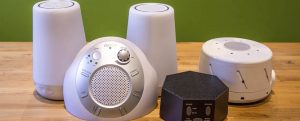
- White noise machines or fans can mask snoring with a steady, less disruptive sound.
- Bedroom positioning, such as facing away from your partner or adjusting bed height, can slightly reduce how directly the sound reaches you.
- Treating nasal congestion in the snoring partner, including allergy management or a humidifier, can reduce snoring volume at the source.
- Separate sleep schedules or spaces on especially difficult nights can be a practical short-term fix.
- Encouraging a medical evaluation is worth considering if snoring is loud, irregular, or paired with gasping or pauses in breathing, since these can be signs of sleep apnea.
For a deeper look at non-earplug strategies, see our guide on how to block out snoring without earplugs.
Earplugs vs. White Noise vs. Noise-Cancelling Earbuds for Snoring
| Solution | Noise Reduction | Comfort | Best For | Cost |
|---|---|---|---|---|
| Foam earplugs | High | Medium | Maximum passive blocking | $ |
| Silicone earplugs | Medium–High | High | All-night comfort | $$ |
| White noise machine | Low–Medium | High | Masking snoring sound | $–$$ |
| ANC earbuds | Medium–High | Medium | Tech-focused sleepers | $$$ |
| Earplugs + white noise | Very good | Medium | Severe or low-frequency snoring | $$ |
Frequently Asked Questions
What are the best ear plugs to block snoring?
Based on our evaluation, Loop Quiet 2 offers the best overall balance of comfort and noise reduction for most sleepers, though the right pick depends on your sleeping position and how loud the snoring is.
Do earplugs actually block snoring?
They reduce the perceived volume rather than eliminating it. How much depends on fit, material, and how low-pitched the snoring is.
What are the best earplugs for a snoring partner?
Reusable silicone options like Loop Quiet 2 or Alpine SleepSoft work well for many couples because they’re comfortable enough for nightly, long-term use.
Are silicone earplugs good for snoring?
Yes, particularly for people who find foam uncomfortable. They tend to offer slightly less noise reduction than high-NRR foam, but more comfort over a full night.
What are the best earplugs for side sleepers?
Low-profile designs, such as Bilsom SoftFX, Howard Leight Max Small, or Loop Quiet 2, sit flush with the ear and avoid pressing into the pillow.
Can I still hear my alarm while wearing earplugs?
It depends on the earplug’s attenuation level. Moderate-NRR options like Happy Ears are designed to let sharper sounds through, while high-NRR foam may require a backup alarm method.
Are noise-cancelling earplugs good for snoring?
They can help, but they aren’t automatically better than a good physical seal, since snoring’s low-frequency, irregular nature is harder to cancel electronically than steady background noise.
Is it safe to sleep with earplugs every night?
For most people, yes, as long as they’re cleaned regularly (if reusable) and not pushed too deep into the ear canal. Occasional breaks can help prevent earwax buildup and irritation.
Can earplugs block snoring completely?
No product blocks snoring completely. The goal is a meaningful reduction in perceived volume, not total silence.
Should I use earplugs or noise-cancelling earbuds for snoring?
For most sleepers, earplugs offer better value and comfort. Noise-cancelling earbuds may appeal to those who already prefer wearable tech and want an alternative to a traditional seal.
Final Verdict: Which Earplugs Are Best for Snoring?
There’s no single best option here. It comes down to what’s disrupting your sleep the most.
Best for side sleepersBilsom SoftFX / Howard Leight Max Small
Best silicone optionMack’s Pillow Soft Silicone
Best for severe snoringLaser Lite / Moldex SparkPlugs
Best for hearing an alarmHappy Ears Sleep Earplugs
Best budget pickMack’s Ultra Soft Foam (50-pair jar)
Best premium reusableAlpine SleepSoft
If your main issue is comfort over a full night, start with a soft silicone option. If the snoring itself is loud and low, a high-attenuation foam plug paired with white noise is worth considering. Either way, checking current pricing and availability before you decide is a reasonable next step, since options and stock can shift.
Ready for a quieter night’s sleep?
If you’re looking for the best overall balance of comfort and noise reduction, the Loop Quiet 2 is our top recommendation. Check current availability to see if it’s the right fit for your nights.