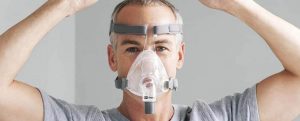
Sleeping on your side with a full-face CPAP mask can be frustrating. A bulky frame presses against the pillow, the cushion shifts, air leaks start, and you wake up with a mark across your cheek.
It’s tempting to assume the fix is simple: switch to a nasal mask. But for many people, that isn’t realistic. If you breathe through your mouth at night, deal with nasal congestion, or need a mask that covers both your nose and mouth, a full-face mask is often the better choice — the challenge is finding one that actually works while you’re on your side.
This guide covers:
- Which full-face masks hold up best for side sleeping
- Which designs reduce pillow interference and hose drag
- Which options work better for people with beards
- How to stop leaks, including two side-sleeper problems most articles skip: jaw drop and eye-level air leaks
- Whether a CPAP pillow is worth adding to the mix
See our top full-face CPAP masks for side sleepers below, or jump to the comparison table.
Quick Picks: Best Full Face CPAP Masks for Side Sleepers
| Best For | Recommended Mask | Key Advantage |
|---|---|---|
| Best Overall | ResMed AirFit F40 | Compact, low-profile design |
| Best for Active Side Sleepers | ResMed AirFit F30i | Top-of-head tubing |
| Best for Seal Stability | Fisher & Paykel Evora Full | Dynamic seal, jaw-drop resistance |
| Best for Beards | ResMed AirTouch F20 | Memory-foam cushion |
| Best Hollow-Frame Design | Philips Respironics DreamWear Full Face | Air flows through the frame, not a hose in front of your face |
| Best Traditional Full Face | Fisher & Paykel Vitera | Stability bar designed for movement |
| Best Budget-Friendly | 3B Medical / React Health Siesta Full Face | Low-cost replacement cushions |
One thing to keep in mind: pricing, sizing, and availability change often. It’s worth checking current details before making a final decision.
- Quick Picks
- 1. ResMed AirFit F40 — Best Overall
- 2. ResMed AirFit F30i — Best for Active Side Sleepers
- 3. Fisher & Paykel Evora Full — Best for Seal Stability
- 4. ResMed AirTouch F20 — Best for Beards
- 5. Philips DreamWear Full Face — Best Hollow-Frame Design
- 6. Fisher & Paykel Vitera — Best Traditional Full Face
- 7. 3B Medical / React Health Siesta — Best Budget-Friendly
- Full Comparison Table
- How We Chose
- Can You Sleep on Your Side?
- Why Side Sleeping Is Difficult
- How to Stop Leaks
- Best Masks for Beards
- Full Face vs. Nasal Mask
- Do You Need a CPAP Pillow?
- How to Choose
- Common Mistakes
- FAQ
- Final Verdict
1. ResMed AirFit F40 — Best Overall for Side Sleepers
Low Profile
Under-the-Nose Seal
Flexible Frame
Why It’s Our Top Pick
The AirFit F40 is designed around a simple idea: put less mask between your face and the pillow. It uses an under-the-nose cushion and a flexible frame instead of the bulkier shape found on traditional full-face masks. ResMed positions the F40 specifically as a minimal-contact mask built for people who move and change positions during the night, which lines up well with what side sleepers actually need.
In practice, that means less material catching on the pillow, fewer accidental bumps that break the seal, and a wider field of vision if you like to read or watch something before falling asleep.
What We Like
- Low profile compared with most full-face masks
- Minimal forehead contact
- Wide field of vision
- Flexible cushion that moves with you
What to Consider
- May not suit every facial shape
- A thick beard can still affect the seal
- Magnetic clips require some care during handling
Best For
Side sleepers who want full-face coverage without the bulk of a traditional mask.
2. ResMed AirFit F30i — Best for Active Side Sleepers
Top-of-Head Tubing
Under-the-Nose Seal
Low Profile
Why It’s a Strong Choice
If you toss and turn, tubing placement matters more than almost anything else. The F30i routes its hose from the top of the head instead of the front of the face, which reduces the tugging that happens when you roll from one side to the other.
Combined with an under-the-nose cushion, this design keeps the mask relatively flat against the face. That can mean less interference when your head presses into the pillow, and an easier transition if you shift between sleeping on your back and your side.
What We Like
- Excellent freedom of movement
- Hose stays out of the way
- Low-profile facial design
- Works well for combination sleepers
What to Consider
- Some people prefer a traditional full-face cushion feel
- Correct sizing matters more than usual with this style
Best For
Active side sleepers who change positions several times a night.
3. Fisher & Paykel Evora Full — Best for Seal Stability
Dynamic Seal
Jaw-Drop Resistant
Structured Chin Support
Why It Deserves a Spot on This List
One side-sleeping problem that rarely gets discussed: jaw drop. When you’re lying on your side, gravity can pull your jaw slightly downward, which tugs the lower part of the cushion away from the chin and opens a leak path right where you’d least expect it.
The Evora Full is built with this in mind. Its dynamic seal is designed to flex with facial movement instead of breaking contact, and the chin area is more structured than on many competing masks. For side sleepers who’ve tried other full-face masks and kept waking up to leaks around the mouth, this is worth considering.
What We Like
- Seal designed to move with the face rather than resist it
- Reduced leak risk from jaw drop
- Comfortable for extended side-lying positions
What to Consider
- Bulkier profile than the F40 or F30i
- Newer to some markets, so availability can vary
Best For
Side sleepers whose main complaint is leaks around the chin and mouth rather than the nose bridge.
4. ResMed AirTouch F20 — Best for Beards
Memory-Foam Cushion
Traditional Coverage
Beard-Friendly
Why It’s a Strong Choice for Facial Hair
Facial hair changes how a CPAP mask seals. Silicone cushions rely on smooth, direct contact with skin, and beard hair can create small gaps that lead to air leaks. Memory foam behaves differently — it compresses and conforms around hair rather than trying to seal against it.
The AirTouch F20 uses a memory-foam cushion for exactly this reason. It won’t guarantee a perfect seal for every beard length or density, but for many people with facial hair, it performs noticeably better than a standard silicone mask.
What We Like
- Memory-foam cushion conforms around facial hair
- Traditional full-face coverage
- A reasonable option for people who’ve struggled with silicone cushions
What to Consider
- Foam cushions typically need replacing more often
- Slightly higher ongoing cost
- Proper fitting still matters, beard or not
Best For
Side sleepers with thicker facial hair who’ve had leak problems with standard silicone masks.
5. Philips Respironics DreamWear Full Face — Best Hollow-Frame Design
Top-of-Head Tubing
Hollow Frame
Multiple Sizes
Why It Stands Out
Instead of routing air through a hose that hangs in front of your face, the DreamWear Full Face channels airflow through the frame itself. Combined with top-of-head tubing and an under-the-nose seal, this keeps the area in front of your face largely clear — no hose weight pulling at the mask when you turn over.
It comes in multiple cushion and frame sizes, which helps with fit, though results vary depending on face shape.
What We Like
- Low profile
- Top-mounted tubing
- Several sizing options
- Good field of vision
What to Consider
- Fit can vary significantly between users
- The under-the-nose design isn’t the right feel for everyone
Best For
Side sleepers who dislike masks that sit directly over the bridge of the nose.
6. Fisher & Paykel Vitera — Best Traditional Full Face for Side Sleepers
Stability Bar
Flexible Seal
Over-the-Bridge Coverage
Why It Remains Relevant
Not everyone wants an ultra-minimalist mask. Some sleepers simply prefer the familiar feel of a traditional nose-and-mouth seal, and the Vitera is built to support that preference without ignoring the needs of side sleepers.
Its stability bar and flexible seal are designed to handle the kind of movement that happens when a mask presses into a pillow, flexing under pressure instead of losing contact entirely. It’s a good middle ground for people who want a conventional design that still holds up overnight.
What We Like
- Traditional full-face coverage
- Stability bar helps the seal handle pillow pressure
- Multiple cushion sizes
What to Consider
- Bulkier than low-profile options like the F40
- Not the best choice for very active sleepers
Best For
People who prefer the feel of a conventional full-face mask but still sleep on their side.
7. 3B Medical / React Health Siesta Full Face — Best Budget-Friendly Option
Low-Cost Cushions
Simple 3-Part Design
Why It’s Worth Considering
Budget-friendly doesn’t have to mean cheaply made. The Siesta Full Face uses a simple three-part design, which tends to mean fewer components to replace and a lower cost per replacement cushion over time. For sleepers comparing total ownership cost — not just the sticker price — this is one to look at.
It won’t match the top-of-head tubing or ultra-low profile of pricier options, but for many sleepers on a tighter budget, it covers the basics well.
What We Like
- Lower upfront and replacement costs
- Simple design, fewer parts to manage
- Reasonable overall value
What to Consider
- Lacks some of the side-sleeper-specific features found in premium masks
- Fewer sizing options than ResMed or Fisher & Paykel lines
Best For
Side sleepers who want solid full-face performance without paying for every premium feature.
Full Face CPAP Mask Comparison Table
| Mask | Profile | Tubing Position | Cushion Style | Beard Friendly | Jaw-Drop Resistance | Side Sleeping | Best For | CTA |
|---|---|---|---|---|---|---|---|---|
| ResMed AirFit F40 | Very Low | Front | Silicone (under-nose) | Moderate | Moderate | Excellent | Overall pick | Check Price |
| ResMed AirFit F30i | Low | Top of head | Silicone (under-nose) | Moderate | Moderate | Excellent | Active sleepers | Check Price |
| Fisher & Paykel Evora Full | Moderate | Front | Dynamic silicone | Moderate | Strong | Very Good | Chin/mouth leaks | Check Price |
| ResMed AirTouch F20 | Moderate | Front | Memory foam | Strong | Moderate | Good | Beards | Check Price |
| Philips DreamWear Full Face | Low | Top of head | Silicone (under-nose) | Moderate | Moderate | Very Good | Clear front-of-face fit | Check Price |
| Fisher & Paykel Vitera | Moderate-High | Front | Flexible silicone | Moderate | Moderate | Good | Traditional feel | Check Price |
| 3B Medical Siesta Full Face | Moderate | Front | Silicone | Moderate | Moderate | Good | Budget | Check Price |
How We Chose the Best Full Face CPAP Masks for Side Sleepers
Based on our evaluation, masks were compared across ten factors that matter most for side sleeping specifically:
1. Side-sleeping stability — Does the mask stay in position when the face presses into the pillow?
2. Seal reliability — How easily does pillow pressure cause a leak?
3. Mask profile — Does the frame protrude significantly from the face?
4. Tubing placement — Top-of-head tubing can reduce hose drag for people who move around at night.
5. Cushion design — Silicone, memory foam, under-the-nose, and hybrid cushions all behave differently under pressure.
6. Beard compatibility — Facial hair can interfere with the seal, and smaller or foam-based sealing surfaces tend to handle this better.
7. Comfort — Pressure points, strap tension, forehead contact, and skin irritation all factor in.
8. Ease of adjustment — A mask that needs constant retightening is a poor fit for most side sleepers.
9. Replacement costs — Cushions, headgear, and other components add up over time.
10. Sizing — Correct sizing is often more important than which mask ranks “best” on paper.
Can You Sleep on Your Side With a Full Face CPAP Mask?
Yes. Side sleeping is possible with a full-face CPAP mask, and it’s a common setup — not a workaround.
The main challenge is maintaining the seal. Pillow pressure can push against the mask frame, and a bulkier design leaves more surface area for that pressure to disturb. A low-profile mask reduces this interference, and a flexible cushion can accommodate the small amount of movement that happens naturally overnight. Top-of-head tubing also helps, since it keeps the hose from pulling at the mask when you change positions.
The American Sleep Apnea Association notes that side sleeping with a full-face mask is possible, while also pointing out that full-face masks can be more prone to shifting and leaks than smaller nasal designs simply because of their larger size. That tradeoff is worth keeping in mind as you weigh your options.
Why Is Side Sleeping With a Full Face CPAP Mask So Difficult?
A few distinct problems tend to show up together, even though they have different causes.
Air Leaks
Pillow pressure against the mask frame can shift the cushion just enough to break the seal, especially around the edges.
Eye-Level Air Leaks
This one gets less attention than it should. When pillow pressure tilts the mask sideways, it can push high-pressure air up toward the inner corner of the eyes. Waking up with dry, irritated eyes is often a sign of this specific leak pattern rather than a general fit problem. Low-profile masks with a narrower bridge — like the F40 or DreamWear Full Face — tend to reduce this because there’s less mask surface near the eyes to begin with.
Jaw Drop
Side-lying can let the jaw sag slightly, pulling the lower cushion away from the chin. This opens a leak path around the mouth that a properly fitted mask wouldn’t normally have. Masks with a more structured chin area, like the Evora Full, are designed specifically to resist this.
Pressure Marks
Extended contact against a pillow can leave marks on the cheeks, nose, upper lip, chin, or jaw, particularly with masks that have a larger footprint.
Mask Movement
Turning from one side to the other can shift the cushion, even briefly, which is enough to cause a leak until the mask resettles.
Hose Management
A hose that hangs in front of the face can pull against the mask every time you move, gradually working the seal loose.
Pillow Interference
A standard flat pillow pushes directly against the mask frame, which is one reason CPAP-specific pillows exist in the first place.
How to Stop a Full Face CPAP Mask From Leaking When Side Sleeping
Tip 1: Don’t Over-Tighten the Mask
It’s a common instinct, but excessive strap tension can sometimes worsen a leak instead of fixing it by distorting the cushion shape.
Tip 2: Adjust the Mask While Lying in Your Normal Sleeping Position
A mask that seals well while you’re sitting upright may behave differently once you’re actually on your side. Adjusting in your real sleeping position gives a more accurate fit.
Tip 3: Try a CPAP Pillow — But Check the Cutout Depth
CPAP pillows use cutouts or contoured shapes to create room around the mask, which can reduce pressure and leaks. One detail that’s easy to miss: standard cutout depths are often designed with nasal masks in mind and aren’t always deep enough for a bulkier full-face frame. If you’re using a full-face mask, look for a pillow built with that specifically in mind — something like the Contour CPAP Max Pillow 2.0, which uses a deeper, wider cutout designed to accommodate larger mask profiles rather than just nasal cushions.
Deep, wide cutout designed for full-face masks
Tip 4: Consider a Low-Profile Mask
Masks like the F40, F30i, and DreamWear Full Face reduce the amount of frame pressing into the pillow in the first place.
Tip 5: Manage the Hose
Routing the hose upward or away from the pillow — or choosing a mask with top-of-head tubing — can reduce the pulling that gradually loosens a seal.
Tip 6: Check Your Cushion Size
A cushion that’s the wrong size can cause leaks no matter how good the mask’s design is or how you’re sleeping.
Tip 7: Replace Worn Cushions
Cushions lose elasticity over time. If leaks have gotten worse gradually rather than suddenly, an aging cushion is a likely cause.
Tip 8: Don’t Automatically Increase CPAP Pressure
If leaks continue after trying the steps above, the better move is to talk with your CPAP provider rather than adjusting your prescribed pressure on your own.
Best Full Face CPAP Mask for Side Sleepers With Beards
Facial hair can make CPAP mask fitting more difficult because it interferes with the cushion’s direct contact with skin. That doesn’t mean a beard rules out a full-face mask — it just narrows which designs are worth trying first.
Best Overall for Beards: ResMed AirTouch F20 — its memory-foam cushion conforms around hair rather than trying to seal directly against it.
Best for Very Thick Beards: Consider pairing a memory-foam mask with more frequent cushion checks, since thicker or coarser facial hair tends to compress foam less evenly.
Best for Active Side Sleepers With Beards: ResMed AirFit F30i — its under-the-nose seal keeps a smaller surface in contact with the beard area near the mouth.
A few practical notes: beard thickness, mustache length near the upper lip, and how often the mask cushion is cleaned all affect sealing. No mask is guaranteed to seal perfectly on every beard, and trimming facial hair along the seal line — without necessarily shaving — can sometimes improve fit.
Full Face vs. Nasal Mask for Side Sleepers
| Feature | Full Face | Nasal | Nasal Pillow |
|---|---|---|---|
| Covers mouth | Yes | No | No |
| Side-sleeping bulk | Higher | Moderate | Lowest |
| Mouth breathing | Better suited | May require management | May require management |
| Facial contact | More | Moderate | Minimal |
| Pillow interference | Higher | Lower | Lowest |
| Beard considerations | Important | Important | Usually less of an issue |
Should Side Sleepers Always Use a Nasal Mask?
No. The right mask depends on your breathing pattern, therapy requirements, comfort, fit, and guidance from your clinician — not just which style is generally less bulky.
Related: Best CPAP Mask for Side Sleepers
Do You Need a CPAP Pillow for Side Sleeping?
No, but for many sleepers using a full-face mask, it can make things noticeably easier.
A CPAP pillow’s cutout or contoured design reduces direct mask pressure, improves hose clearance, and can mean fewer leaks and less pressure on the cheeks. As mentioned above, the depth of the cutout matters more for full-face masks than for nasal masks, since the frame simply takes up more space.
If you’ve tried adjusting your mask and hose routing without much improvement, a CPAP pillow designed for full-face masks — such as the Contour CPAP Max Pillow 2.0 — is a reasonable next step before assuming the mask itself is the problem.
Related: Best CPAP Pillow for Side Sleepers
How to Choose the Best Full Face CPAP Mask for Side Sleeping
Choose a low-profile mask if: you dislike bulky masks and want minimal pillow contact.
Choose top-of-head tubing if: you frequently change positions during the night.
Choose a memory-foam cushion if: you have a beard or struggle with facial pressure points.
Choose a mask with a structured chin design if: your main issue has been leaks around the mouth or chin, not the nose bridge.
Choose an under-the-nose design if: you dislike masks that cross the bridge of your nose.
Choose a traditional full-face mask if: you prefer a familiar nose-and-mouth seal over a minimalist design.
Common Mistakes Side Sleepers Make With Full Face CPAP Masks
- Buying based only on price, without considering replacement cushion costs over time
- Choosing the wrong cushion size, which causes leaks regardless of mask quality
- Tightening straps too much, which can distort the seal instead of improving it
- Using a standard pillow instead of one with adequate clearance for the mask frame
- Ignoring hose position, which leads to unnecessary pulling on the mask overnight
- Sleeping directly on the mask rather than adjusting position slightly to relieve pressure
- Continuing to use a worn cushion long after it has lost its seal quality
- Changing CPAP pressure without medical guidance in response to ongoing leaks
Frequently Asked Questions
Can you sleep on your side with a full face CPAP mask?
Yes. It’s a common sleeping position for full-face mask users, though it requires more attention to fit, cushion condition, and pillow setup than sleeping on your back. A low-profile mask and a mask-friendly pillow both help.
What is the best full face CPAP mask for side sleepers?
Based on our evaluation, the ResMed AirFit F40 is the strongest overall pick because of its compact, under-the-nose design and flexible frame, which reduce pillow interference more than most traditional full-face masks.
What is the best full face CPAP mask for side sleepers with beards?
The ResMed AirTouch F20 is worth considering first, since its memory-foam cushion conforms around facial hair rather than sealing against it directly.
How do I stop my full face CPAP mask from leaking on my side?
Start with mask adjustment while lying in your actual sleeping position, check that your cushion size is correct, and consider a CPAP pillow designed for full-face masks. If leaks persist, talk with your CPAP provider.
Is a full face CPAP mask better than a nasal mask for side sleepers?
Neither is universally better. Full-face masks suit mouth breathers and people needing broader coverage, while nasal and nasal pillow masks tend to have a lower profile and less pillow interference.
What CPAP mask is best for side sleepers who breathe through their mouth?
A full-face or hybrid mask that covers the mouth is generally necessary. Among full-face options, low-profile designs like the F40 or F30i tend to work well for side sleepers specifically.
Is the F40 good for side sleepers?
In most cases, yes. Its low-profile, under-the-nose design is one of the reasons it tops this list.
Is the F30i good for side sleepers?
Yes, particularly for people who move around during the night, thanks to its top-of-head tubing and under-the-nose seal.
Can I use a CPAP pillow with a full face mask?
Yes. Look for one with a cutout deep enough to accommodate the larger frame of a full-face mask, rather than a standard nasal-mask design.
Why does my CPAP mask leak when I sleep on my side?
Common causes include pillow pressure shifting the cushion, incorrect sizing, a worn-out cushion, jaw drop pulling the seal away from the chin, and hose tension pulling against the mask.
Final Verdict: Which Full Face CPAP Mask Is Best for Side Sleepers?
Our Top Pick
Best overall balance of compact design, comfort, and side-sleeping freedom.
Rather than repeating the rankings above, here’s a simple way to decide:
Choose the ResMed AirFit F40 if: you want the best overall balance of compact design, comfort, and side-sleeping freedom.
Choose the ResMed AirFit F30i if: you move around a lot and want tubing that stays out of the way.
Choose the Fisher & Paykel Evora Full if: your main problem has been leaks around the chin or mouth rather than the nose.
Choose the ResMed AirTouch F20 if: you have facial hair and traditional silicone cushions haven’t worked well for you.
Choose the Philips DreamWear Full Face if: you prefer an under-the-nose design with the hose kept clear of your face.
Choose the Fisher & Paykel Vitera if: you want a traditional full-face feel that’s still built to handle movement.
Choose the 3B Medical Siesta Full Face if: you’re prioritizing total cost over premium features.
The best full-face CPAP mask isn’t necessarily the smallest or most expensive one. It’s the one that gives you a stable seal without making your preferred sleeping position uncomfortable — and for most side sleepers, that means paying close attention to profile, tubing position, and cushion design rather than brand name alone.
Ready to Make Side Sleeping Work?
Browse our top-rated picks and find the full-face mask that fits your sleep style.
This article contains affiliate links. If you purchase through one of these links, SleepDeeper may earn a commission at no extra cost to you. Product details, including pricing and availability, should be verified with the manufacturer before purchase. This content is for informational purposes and isn’t a substitute for guidance from your CPAP provider or physician.
Last updated: 2026