If you’ve been washing sheets more nights than not, you’ve probably already tried pull-ups and mattress protectors. They help with cleanup, but they don’t do much to change what’s happening while your child (or you) is asleep. That’s the gap bedwetting alarms are designed to close.
A bedwetting alarm doesn’t stop wetting on its own. Instead, it works with the body over time, helping the brain and bladder learn to communicate during sleep. That means alarms take patience. Most families need several weeks of consistent use before they see real change, and success usually depends as much on how the alarm is used as which one you buy.
This guide compares the most popular bedwetting alarms on the market based on detection reliability, alarm strength, comfort, ease of use, and who each one actually fits best. We tested claims against real-world use cases — a deep-sleeping seven-year-old is a different problem than a busy teenager who wants something nobody notices, and those two situations often call for different alarms.
A quick note before you start: bedwetting that begins suddenly, especially in a child who was previously dry at night, can sometimes be connected to a urinary tract infection, constipation, sleep apnea, or other medical issues. If that sounds like your situation, or if daytime symptoms are also present, it’s worth checking in with a pediatrician before starting alarm training. For most children with ongoing nighttime wetting and no other symptoms, a bedwetting alarm is a reasonable and well-studied first step.
Quick Picks: Best Bedwetting Alarms
If you just want a starting point, here’s the short version. Full reviews and a detailed feature comparison are further down the page.
| Alarm | Type | Best For | Quick Verdict | CTA |
|---|---|---|---|---|
| Malem Ultimate | Wired/Wearable | Best overall | Loud, reliable, and consistent — a solid default choice for most families | Check Price |
| Chummie Premium | Wired/Wearable | Deep sleepers & younger kids | Soft sensor and strong vibration, without a hard clip | Check Price |
| Rodger Wireless | Wireless (sensor briefs) | Restless sleepers & wireless preference | No cord to tangle with, though it costs more | Check Price |
| DryEasy | Wired/Wearable | Budget-conscious buyers | Covers the basics well at a lower price point | Check Price |
| TheraPee Smart Alarm | App-connected | Tech-comfortable families | Progress tracking, though the app is an extra step some don’t need | View Details |
- Quick Picks: Best Bedwetting Alarms
- How Bedwetting Alarms Actually Work
- Our Bedwetting Alarm Reviews
- How We Compare Bedwetting Alarms
- Detailed Comparison
- Two Features Worth Paying Attention To
- Wireless Bedwetting Alarm Reviews: Are They Better?
- Which Bedwetting Alarm Is Best for You?
- How Long Does a Bedwetting Alarm Take to Work?
- How to Use a Bedwetting Alarm Correctly
- Bedwetting Alarm vs. Pull-Ups
- Are Bedwetting Alarms Worth It?
- What to Look for When Buying a Bedwetting Alarm
- Frequently Asked Questions
- Final Verdict: Which Bedwetting Alarm Should You Buy?
How Bedwetting Alarms Actually Work
Before getting into individual reviews, it helps to understand what these devices are doing, since it shapes how you should use one and what to expect.
A bedwetting alarm uses a small moisture sensor, usually clipped to underwear or built into a wearable pad, that detects the first drops of moisture. When it senses wetness, it triggers a sound, vibration, or both. Over repeated nights, the body starts to associate the feeling of a full bladder with waking up before the alarm even goes off. This is a conditioning process, not an instant fix — the alarm doesn’t “teach the bladder” in one or two nights, and progress is rarely a straight line. Some nights will look like no progress was made at all, which is normal and doesn’t mean the alarm isn’t working.
Key takeaway: Bedwetting alarms work through conditioning, not instant correction. Expect the first week or two to show little visible change — consistency is what drives results over time.
Our Bedwetting Alarm Reviews
1. Malem Ultimate Bedwetting Alarm
Malem Ultimate Bedwetting Alarm
Loud, reliable, and consistent — a solid default choice for most families.
Malem has been a mainstay in bedwetting alarms for a long time, and the Ultimate is designed to be a dependable, no-frills option that gets the fundamentals right.
How it works: A clip-on sensor attaches to underwear and connects to a small alarm unit worn on the shoulder or pinned to a shirt. The moment moisture is detected, the alarm sounds.
Sound and vibration: This is where Malem stands out. It offers multiple tone options and a genuinely strong vibration setting, which matters if you’re dealing with a deep sleeper who tends to sleep through quieter alarms.
Comfort: The clip mechanism is functional but not the softest option on this list. Some kids adjust to it quickly; others find the metal clip mildly irritating at first.
Setup and cleaning: Straightforward once you’ve done it a few times, though the instructions can feel a little technical for a first-time user.
What We Like
- Strong, multi-tone alarm and vibration
- Long track record and widely recommended by pediatric practices
- Reasonably durable for nightly use
What to Consider
- Clip sensor isn’t the most comfortable option available
- No parent-side receiver included on the base model
- Learning curve for first-time setup
Verdict: If reliability and alarm strength matter more to you than comfort or wireless convenience, the Malem Ultimate is one of the strongest options to consider. It’s a dependable starting point for most families, though it isn’t necessarily the best fit for children who are sensitive to the clip or for parents who want a wireless setup from day one.
2. Chummie Premium Bedwetting Alarm
Chummie Premium Bedwetting Alarm
Soft sensor and strong vibration, without a hard clip — ideal for sensitive sleepers.
Chummie was designed with younger, more sensitive sleepers in mind, and it shows in the details.
How it works: Like Malem, it uses a wearable clip-on sensor connected to an alarm unit, but the sensor itself is silicone-covered rather than bare metal, which makes it noticeably softer against skin.
Sound and vibration: Multiple sound options plus a strong vibration mode, aimed specifically at deep sleepers. In practice, it performs close to Malem in wake effectiveness.
Comfort: This is Chummie’s strongest selling point. The soft sensor tends to be better tolerated by younger kids who might resist a stiffer clip.
Ease of use: One-touch operation makes it simpler for kids to manage themselves as they get more independent with the process, which can help with buy-in.
Reward tracking: Some Chummie kits include simple sticker charts or progress trackers, which can help younger children stay motivated. This kind of small behavioral reinforcement often makes a real difference for kids in the five-to-eight range, where sticking with a nightly routine can be the hardest part.
What We Like
- Soft, silicone sensor is easier on sensitive skin
- Strong vibration for deep sleepers
- Simple, kid-friendly operation
What to Consider
- Costs more than basic wired alarms
- Still a wired design, so cord management takes some getting used to
- Reward chart materials, if included, vary by kit
Verdict: For younger children or deep sleepers who need a gentler physical experience without giving up alarm strength, Chummie is one of the better-suited options on this list. It’s less of a fit for older kids who’d rather avoid anything that reads as “kid-oriented.”
3. Rodger Wireless Bedwetting Alarm
Rodger Wireless Bedwetting Alarm
No cord to tangle with — the strongest wireless option for restless sleepers.
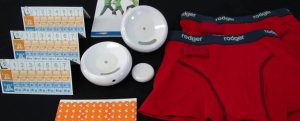
Rodger takes a different approach entirely, building the sensor directly into specialized underwear rather than clipping a sensor onto standard underwear.
How it works: The moisture sensor is woven into sensor briefs, and the alarm connects wirelessly rather than through a cord. That means no wire running from the underwear to a shoulder clip.
Comfort and nighttime usability: This is the main advantage. Without a cord, there’s nothing to tug at during the night, which matters for restless sleepers or kids who move around a lot.
Setup and cleaning: The briefs need to be washed regularly, and you’ll want at least two pairs on hand so one is always ready. This is a bit more maintenance than a simple clip-on sensor.
Who it’s best for: Restless sleepers, and older kids or teens who dislike the feeling of a wire or clip.
What We Like
- No cord to get tangled or pulled loose overnight
- Comfortable for active or restless sleepers
- Discreet design works well for older kids
What to Consider
- Costs more than wired alternatives
- Requires multiple pairs of sensor briefs for daily washing
- Sensor briefs eventually wear out and need replacing
Verdict: If cord-related discomfort or tangling has been a real problem, this is one of the strongest wireless options worth considering. It’s a bigger investment than a basic wired alarm, so it makes the most sense for families where comfort and convenience are the priority.
4. DryEasy Bedwetting Alarm
DryEasy Bedwetting Alarm
Covers the basics well at a lower price point — a reasonable entry-level choice.
DryEasy is built for buyers who want an alarm that covers the basics without paying for extra features they may not need.
How it works: A standard clip-on sensor and wired alarm unit, similar in concept to Malem, but with a simpler feature set.
Sound and vibration: Fewer tone options than Malem or Chummie, and the vibration mode, while present, is noticeably milder. It’s adequate for lighter sleepers but may not be enough on its own for a deep sleeper.
Ease of setup: Genuinely simple, with minimal adjustment needed out of the box.
Comfort: A basic clip design. Not uncomfortable, but not as refined as Chummie’s silicone sensor.
What We Like
- Lower price point than most competitors
- Simple setup with no learning curve
- Reasonably reliable moisture detection
What to Consider
- Vibration is milder, which may not wake deep sleepers on its own
- Fewer sound options
- Build quality feels less durable over many months of nightly use
Verdict: If your priority is trying alarm training without a large upfront cost, DryEasy is a reasonable entry point. For deep sleepers, though, the milder vibration may mean you need a parent to help with waking, at least in the early weeks.
5. TheraPee Smart Bedwetting Alarm
TheraPee Smart Bedwetting Alarm
Progress tracking can help identify patterns — ideal for families who want data.
TheraPee adds a layer of technology to the traditional alarm setup, aiming at families who want to track progress more closely.
How it works: A wearable sensor connects to an alarm unit that also syncs with a companion app, logging wet nights, dry nights, and response times.
App and tracking features: This is what sets TheraPee apart. Parents can review patterns over time, which can be useful for spotting progress that might not be obvious night to night, or for sharing data with a pediatrician if needed.
Ease of use: The app adds a small setup step that not every family will want. For tech-comfortable households, it’s a minor addition; for others, it may feel like an unnecessary extra layer.
Comfort and alarm strength: Comparable to a standard wired alarm — solid but not class-leading in either direction.
What We Like
- Progress tracking can help identify patterns over weeks
- Useful data if you need to loop in a doctor
- Standard alarm and vibration performance
What to Consider
- App adds a setup step some families won’t need
- Not a significant upgrade in alarm strength over simpler models
- Regional availability can vary
Verdict: For families who like data and want an easier way to track long-term progress, TheraPee is worth considering. If you just want a straightforward alarm without extra steps, one of the simpler wired options may suit you better.
How We Compare Bedwetting Alarms
Before getting into the full feature comparison, here’s what we actually evaluated:
- Detection reliability: How quickly and consistently the sensor picks up moisture.
- Alarm effectiveness: Whether the sound is loud enough for the intended sleeper.
- Vibration: Especially important for deep sleepers or anyone who doesn’t reliably wake to sound alone.
- Comfort: Whether the sensor or clip creates any nighttime discomfort.
- Parent awareness: Whether a parent-side receiver is available for children who sleep through the alarm, especially in the early weeks.
- Hygiene and durability: How well the electronics hold up against nightly moisture exposure and repeated washing.
- Wireless vs. wired design: The practical trade-offs of each.
- Battery life: How often you’ll be replacing batteries or recharging.
- Value: The overall cost relative to what the alarm offers, not simply the lowest price.
Detailed Comparison: Malem vs. Chummie vs. Rodger vs. DryEasy vs. TheraPee
| Malem Ultimate | Chummie Premium | Rodger Wireless | DryEasy | TheraPee | |
|---|---|---|---|---|---|
| Type | Wired | Wired | Wireless | Wired | Wired + app |
| Sensor | Metal clip | Silicone-covered clip | Built into briefs | Metal clip | Clip sensor |
| Sound options | Multiple tones | Multiple tones | Multiple tones | Limited | Standard |
| Vibration | Strong | Strong | Moderate | Mild | Standard |
| Parent receiver | Sold separately | Not standard | Available on select kits | Not available | Not available |
| Comfort | Moderate | High | High | Moderate | Moderate |
| Best for | Deep sleepers, reliability | Younger kids, sensitive skin | Restless sleepers, discretion | Budget buyers | Data-focused families |
| Main drawback | Basic clip comfort | Higher price | Higher price, extra laundry | Milder vibration | Extra app step |
| Overall value | Strong | Strong | Good, if wireless matters | Good for the price | Fair |
A few things stand out here. Malem and Chummie perform similarly on alarm strength, so the choice between them often comes down to comfort and price rather than effectiveness. Rodger’s wireless design solves a real problem — cord tangling — but at a higher cost, so it makes the most sense when that specific issue has been a struggle. DryEasy is a reasonable low-cost starting point, though deep sleepers may need more vibration than it offers. TheraPee’s main value is in the data, not in a stronger alarm.
Two Features Worth Paying Attention To
Parent Alarm Receivers
For young children, and for some deep sleepers of any age, the alarm going off doesn’t always mean the child wakes up. A parent-side receiver — a second unit that alerts an adult in another room — solves this by making sure someone is aware even if the child sleeps through the initial sound.
This matters most in the early weeks of training, before the conditioning effect has had time to develop. If you’re working with a younger child (roughly ages five to nine) or a documented heavy sleeper, checking whether an alarm offers a parent receiver, either included or as an add-on, is worth doing before you buy.
Waterproofing and Hygiene
The electronics on a bedwetting alarm sit close to moisture every single night, which is exactly the environment that tends to damage delicate components over time. Clip-on transmitters in particular can be vulnerable if they get fully submerged rather than just lightly dampened.
Look for alarms with water-resistant sensor housings, and be realistic about how the unit will hold up to nightly use and regular washing. A slightly more expensive alarm with better-sealed components can end up being the better value if it means you’re not replacing a unit partway through training.
Buying tip: If you’re choosing between two alarms with similar features, prioritize the one with better water resistance and a more durable build. It will likely save you money over the course of training.
Wireless Bedwetting Alarm Reviews: Are They Better?
Wireless alarms, like Rodger’s sensor-brief design, remove the cord that runs from the sensor to the alarm unit. That has a few real advantages: nothing to tug loose during restless sleep, less risk of the cord irritating skin, and a more discreet look overall, which matters for older kids and teens especially.
The trade-offs are cost and laundry. Wireless systems tend to cost more upfront, and because the sensor is built into the underwear itself, you’ll need multiple pairs in rotation so there’s always a clean, dry set ready to go.
Wireless is worth paying more for if cord tangling or discomfort has been an ongoing issue, or if your child (or you) strongly prefers a low-profile setup. If a standard wired clip hasn’t caused problems, the wireless upgrade may not add much beyond convenience.
Which Bedwetting Alarm Is Best for You?
Best for Kids (Ages 5–9)
Younger children generally do best with a soft sensor, a friendlier alarm sound rather than something jarring, and ideally a parent receiver so an adult can help with the early wake-ups. Chummie’s silicone sensor and optional reward tracking fit well here, and Malem is a solid alternative if a slightly firmer clip isn’t an issue.
Best for Deep Sleepers
Deep sleepers need a loud alarm and strong vibration above almost everything else, since a quiet or gentle alert simply won’t register. Malem’s multi-tone alarm and strong vibration make it one of the more dependable choices, though a parent may still need to help with waking in the first few weeks regardless of which alarm you choose.
Best Wireless Option
Rodger stands out here, mainly because the sensor is built directly into the underwear rather than clipped on, which removes the tangling issue that wired alarms can create for restless sleepers.
Best for Older Kids and Teens
Discretion tends to matter more than anything else at this age. A wireless design like Rodger, or a low-profile wired option, works better than anything that looks obviously “kid-oriented.” Vibration-only modes are also worth considering for teens who don’t want to risk waking siblings or roommates.
Best for Adults
Adults dealing with nighttime wetting have somewhat different needs: discretion, comfortable fitted briefs rather than shoulder-clipped wires, and strong, reliable alerts without a design that feels aimed at children. Wireless briefs designed with adult sizing in mind, where available, tend to be a better fit than repurposing a child-oriented kit.
How Long Does a Bedwetting Alarm Take to Work?
Expect the first week or two to look a lot like no alarm at all — the accidents may continue, and waking may still require a parent’s help. That’s normal and doesn’t mean the alarm isn’t doing its job.
A typical progression looks like this: initially, a parent needs to wake the child after the alarm sounds. Over several weeks, the child may start waking closer to the alarm’s activation on their own. Eventually, many children begin waking just before wetting occurs, or sleep through dry nights without needing the alarm at all.
Most guidance suggests giving an alarm at least six to eight weeks of consistent nightly use before judging whether it’s working. If there’s been no improvement at all after two to three months of correct, consistent use, that’s a reasonable point to check in with a pediatrician about other options.
How to Use a Bedwetting Alarm Correctly
- Set up the alarm before bedtime, with sensor and alarm unit both charged or fitted with fresh batteries.
- Position the moisture sensor correctly, following the manufacturer’s placement instructions closely — this is one of the most common sources of missed detections.
- Make sure the alarm is within hearing or feeling range, especially if using a parent receiver in another room.
- Respond immediately when it activates, rather than snoozing or silencing it while still in bed.
- Get up and go to the bathroom, even if only a small amount has already been released.
- Reset the sensor and change into dry clothes and bedding as needed.
- Track dry and wet nights, whether with an app, chart, or simple notebook, to see patterns over time.
- Stay consistent, using the alarm every night rather than only on nights that feel convenient.
Common Bedwetting Alarm Mistakes
- Placing the sensor in the wrong spot, which delays detection
- Turning off the alarm without actually getting up
- Wearing pull-ups in a way that prevents the sensor from reaching skin or fabric
- Giving up after only a few nights instead of committing to several weeks
- Choosing an alarm that’s too quiet or has weak vibration for a known deep sleeper
- Leaving the child out of the process entirely, rather than involving them in setup and response
Important: If bedwetting begins suddenly in a child who was previously dry, or if daytime symptoms are present, consult a pediatrician before starting alarm training. These can sometimes indicate a urinary tract infection, constipation, sleep apnea, or other medical issues.
Bedwetting Alarm vs. Pull-Ups
Pull-ups manage the outcome — they contain moisture so sleep isn’t disrupted and cleanup is easier. A bedwetting alarm, on the other hand, is aimed at changing the nighttime response itself, so that waking (or staying dry) eventually happens without any device at all.
These two approaches can be used together in some situations, such as during travel, but there’s a catch: many pull-ups are absorbent enough that they can prevent the sensor from picking up moisture quickly, which undermines the conditioning process. If you’re actively training with an alarm, standard underwear (or the alarm’s own sensor briefs) generally works better than pull-ups, at least on the nights you’re using the alarm.
Are Bedwetting Alarms Worth It?
Advantages: Alarms address the underlying nighttime response rather than just managing wetness, and for many children, they lead to lasting dryness rather than a solution that only works while it’s in use.
Limitations: They take weeks of consistent effort, often require parental involvement early on, and results vary depending on the child, the alarm, and how consistently it’s used.
Who benefits most: Children and adults who’ve had ongoing nighttime wetting without an underlying medical cause, and who are able to commit to consistent nightly use for at least a couple of months.
When another approach might make more sense: If there’s a suspected medical cause, or if a family isn’t in a position to manage consistent nightly use (frequent travel, inconsistent schedules), it may be worth talking to a doctor about other options before investing in an alarm.
Based on the comparison above, an alarm with strong vibration and, ideally, a parent receiver tends to offer the best odds of success for most families starting out.
What to Look for When Buying a Bedwetting Alarm
1. Moisture Sensor Quality — Look for sensors that detect quickly and consistently, without frequent false alarms.
2. Loudness and Alarm Options — Multiple tone options help if one sound proves ineffective at waking your sleeper.
3. Vibration — Essential for deep sleepers or anyone who doesn’t reliably respond to sound.
4. Wired vs. Wireless Design — Wired options are typically less expensive; wireless options reduce tangling and offer more discretion.
5. Comfort — Silicone-covered sensors or brief-integrated designs tend to be better tolerated over nightly use.
6. Parent Receiver Availability — Worth prioritizing for younger children or known deep sleepers, especially in the first few weeks.
7. Waterproofing and Build Quality — Water-resistant components hold up better against nightly moisture exposure.
8. Ease of Cleaning — Removable, washable parts make longer-term use more manageable.
9. Battery Life — Frequent battery changes or charging can become a hassle over months of use.
10. Price and Overall Value — Consider the total picture, including durability and included features, rather than choosing based on price alone.
Bedwetting Alarm Buyer’s Guide
Get our printable checklist to compare alarms, track progress, and choose the right device for your family.
We respect your privacy. Unsubscribe anytime.
Frequently Asked Questions
Do bedwetting alarms really work?
For many children, yes. Alarm-based conditioning is one of the more studied behavioral approaches to nighttime wetting, and it has a track record of helping many kids achieve lasting dryness. Results vary depending on the child, consistency of use, and sometimes underlying causes that may need separate attention.
How long should you use a bedwetting alarm?
Most families see the clearest results after six to eight weeks of consistent nightly use, and some children need longer. Stopping too early, before the conditioning effect has had a chance to develop, is one of the most common reasons alarms seem not to work.
What is the best bedwetting alarm?
There isn’t one alarm that’s best for everyone. Based on our comparison, Malem and Chummie stand out for reliability and comfort respectively, Rodger is the strongest wireless pick, DryEasy fits tighter budgets, and TheraPee suits families who want progress tracking.
Are wireless bedwetting alarms better?
They’re better for specific situations — restless sleepers, cord discomfort, or a preference for discretion — but not universally better. A well-chosen wired alarm can work just as effectively for many families at a lower cost.
Do bedwetting alarms work for deep sleepers?
They can, but strong vibration matters more than sound alone, and a parent may need to help with waking during the early weeks regardless of which alarm is used.
Can you use a bedwetting alarm with pull-ups?
It’s possible, but many pull-ups are absorbent enough to slow moisture detection, which can undermine training. Standard underwear or the alarm’s own sensor design usually works better on nights you’re actively training.
Are bedwetting alarms suitable for adults?
Yes. Product design matters more for adults, since discretion and comfortable, non-child-oriented fits become more important than they are for younger children.
How quickly does a bedwetting alarm work?
Expect the first couple of weeks to show little visible change. Real progress usually builds gradually over a month or two, so it’s worth resisting the urge to judge an alarm’s effectiveness too early.
Final Verdict: Which Bedwetting Alarm Should You Buy?
Based on the criteria above, the Malem Ultimate is a strong overall pick for most families thanks to its reliable detection and strong alarm output. If comfort and a gentler sensor matter more, especially for younger or more sensitive kids, the Chummie Premium is worth considering instead. Restless sleepers or anyone bothered by cords will likely do better with the Rodger Wireless, and the DryEasy remains a sensible option if budget is the main constraint, keeping in mind its milder vibration. Families who want to track progress closely may prefer the TheraPee Smart Alarm for its added data.
If you’re ready to move forward, it’s worth checking current pricing and availability for whichever model fits your situation best before making a final decision. The right choice depends less on which alarm is objectively “best” and more on which one matches your child’s sleep habits, your household’s routine, and how much you’re willing to spend on comfort and convenience features like wireless design or parent receivers.
Our Top Picks at a Glance
Ready to Choose the Right Bedwetting Alarm?
Compare current pricing and availability for the top-rated bedwetting alarms for your family’s needs.